Tarot Combinations, Spreads and Getting Started
One guide for reading tarot: how combinations work, the spreads worth knowing, what the cards mean, and the practical business of choosing and caring for a deck.
How to Start Reading Tarot (One Card a Day)
You have a deck. Now what? Most beginners freeze here, convinced they need to memorize 78 meanings before they're allowed to pull a single card. You don't. The secret to actually starting is to keep it ridiculously small: one card a day. Here's how.
The one-card-a-day method
Each morning (or night, whenever you have a quiet minute), shuffle your deck and pull one card. That's the whole practice. Ask a simple question like what you need to know today, or where you should put your energy. Then sit with the card for a moment before reaching for the guidebook.
How to actually pull a card
- Shuffle your way. There's no correct shuffle. Riffle, hand-over-hand, drop them on the bed and swirl them around with your hand. Do whatever feels good.
- Cut the deck if you like, or don't. Again, no rules.
- Draw from the top, or fan the cards and pick the one that calls you. Both are valid.
- Try not to shop for a good card. If a card comes up that makes you flinch, that's the one to keep. The flinch is information.
What to do with the card
- Look at it first. Notice what catches your eye before anyone tells you what it means. Your first impression is data.
- Then check the guidebook. Read the official meaning. Hold it next to your own impression. Both matter.
- Name one feeling it brings up. Just one. You don't need a full essay.
A simple journal format
Three lines is enough to build a practice that actually sticks:
- The card I pulled.
- My first impression of it.
- One thing it might be pointing at for today.
Do that for a month and you'll be shocked how fast you start recognizing cards and patterns without trying.
When you're ready for more
Once one card feels easy, add a second, then try a simple three-card spread (past, present, future). I walk through a few gentle ones in Tarot Spreads for Self-Reflection. The point is to grow only when the current step feels comfortable, not to leap into a ten-card Celtic Cross on day two and overwhelm yourself.
The worries every beginner has
- Do I have to memorize all 78? No. You learn them by living with them. The guidebook is a floor, not a ceiling.
- What if I pull a scary card? Tarot cards aren't predictions. A card like the Tower isn't announcing disaster; it's usually pointing at change or something already shifting. Treat difficult cards as invitations to look, not verdicts.
- Am I doing it wrong? If you pulled a card and thought about it, you did it right. There's no wrong.
The readers who stick with it aren't the ones who memorized the fastest. They're the ones who showed up for one card a day. Pull one today. That's the whole assignment.
↑ back to the listHow to Choose Your First Tarot Deck
So you want your first tarot deck. Welcome to the obsession. (Okay, the craft. Same thing, really.) I collect tarot and oracle decks like some people collect stamps, only mine come with gorgeous art and that juicy spiritual stuff. If you're staring at a wall of decks wondering how on earth to pick, here's the no-pressure guide I wish I'd had when I started.
First, tarot or oracle?
People ask me this all the time: aren't tarot and oracle the same thing? They look similar (both are decks of pretty cards you shuffle and pull) but they read completely differently. Here's the no-jargon breakdown.
- Tarot is usually 78 cards with a fixed structure (the Major and Minor Arcana). It's layered, deep, and a little like learning a language. Classic, powerful, and the rabbit hole most people picture.
- Oracle decks have no set number of cards and no fixed meanings. They're themed, freer, and gentler. You read them by feel more than by rule.
There's no better option. A lot of readers use both, tarot for the deep dives and oracle for the quick, intuitive pulls. If you want structure and tradition, start with tarot. If you want to trust your gut right away, start with an oracle.
What actually matters in a first deck
- Art you genuinely love. You'll stare at these cards a lot. If the art doesn't move you, you won't pick them up. This matters more than anything.
- A guidebook. A good little white book (or a full guidebook) gives you a floor to stand on while your intuition builds.
- A card count you can handle. 78 is the tarot standard and totally learnable, but if 78 feels like a lot, a smaller oracle deck is a perfectly legit starting point.
- A theme that resonates. You should feel something when you look at the deck. That connection is what makes the cards talk back.
A few decks that are friendly to start with
These are mine, so I'm biased, but they're genuinely built for people who want to actually use their cards:
- Empathic Mirror Tarot Companion: a gentle, introspective tarot for self-reflection.
- Shiba Moon Tarot: playful and approachable, a great my-first-tarot if you want something less solemn.
- Witchy Woman Oracle: an oracle, so no fixed meanings to memorize, just pure intuition.
- The Mana-Fest pair (Light Weave and Dark Weave): two decks that read together; pick one or both.
- 12-Card Zodiac Deck: tiny, affordable, and a fun daily-pull oracle if you want to start really small.
How to start reading (without the overwhelm)
- Pull one card a day. That's it. Ask yourself what you need to know today, and sit with the card.
- Use the guidebook, then close it. Read the book first, then put it down and tell yourself what you see. Both matter.
- Keep a little journal. Three lines a day. You'll be shocked how fast you start recognizing patterns.
- Trust your gut. The right meaning is the one that lands for you. Tarot is a mirror, not a verdict.
The best first deck is the one that makes you want to come back tomorrow. Pick the art that pulls you, start with one card a day, and let the rest unfold.
↑ back to the list5 Easy 3-Card Tarot Spreads for Daily Guidance
Three-card spreads are the most versatile tool in cartomancy. They provide deep clarity without overwhelming the reader. Here are 5 practical layouts you can use every day with your favorite indie deck.
1. Past · Present · Future
The classic spread for understanding the trajectory of a situation:
- Card 1 (Left): The background forces that led you here.
- Card 2 (Center): Where you are right now and your current energy.
- Card 3 (Right): The likely outcome if you continue on this path.
2. Mind · Body · Spirit
A gentle check-in spread for daily wellness and alignment:
- Card 1: What your mind needs focus or rest on today.
- Card 2: Physical needs, grounding, and bodily awareness.
- Card 3: Spiritual lesson or intuitive guidance for the day.
3. Situation · Action · Outcome
Ideal when you need clear direction on a specific decision:
- Card 1: The core truth of the current challenge.
- Card 2: The best action step to take.
- Card 3: What shifts once action is taken.
How to Cleanse and Store Your Tarot Deck
You picked a deck, you pulled a few cards, and at some point someone told you that you have to "cleanse" it or your readings will be off. It is not that deep, but a quick reset really does help. Here is how to clear the stale energy off your cards and keep them nice without turning it into a whole production. (Still choosing? See our guide to choosing your first tarot deck.)
Why cleanse a tarot deck at all?
Think of it like closing all the tabs in your brain before you start fresh. A deck picks up the mood of every reading, yours, the question, whatever was floating around the room. After a heavy session, or when a brand-new deck lands in the mail, a quick cleanse gives it a clean slate so you are not reading last week's leftovers.
You do not have to do it every time. Most readers cleanse a new deck when it arrives, after an intense reading, or when the pulls start feeling stuck and the cards get weird. That stuck feeling is your cue.
Easy ways to cleanse your deck (pick one)
There is no correct method. Try one, see how it sits, keep what works.
- Smoke. Light a smudge stick (white sage, palo santo, or incense) and pass the deck through the smoke a few times. Keep the cards back far enough that you do not scorch them. If you cannot burn things where you live, skip ahead.
- Moonlight. Set the deck on a windowsill overnight, especially around a full moon. Free, easy, no fire alarm.
- Sound. Ring a singing bowl, a chime, or just clap near the deck. Sound breaks up the stale stuff nicely and it is renter-friendly.
- Breath and intention. Hold the deck, take one breath, and silently tell it "new reading, clean slate." A little cheesy, very effective, costs nothing.
- A crystal. Rest a clear quartz or selenite on top of the deck for a few hours. Selenite is the classic self-cleansing one.
A quick heads-up about salt and water
You will see people tell you to bury your deck in salt or wipe it down with water. Do not. Salt is abrasive and moisture warps cards. If you love the salt method, put the deck in a bag first and set the bag on the salt, never let the salt touch the cards. Same with water: mist the air around the deck, never the deck itself.
How to store your tarot deck
Storage is half the care. A good home keeps the cards flat, dry, and out of direct sun, because sun fades the art fast.
- A cloth bag or the box it came in. Both are great. The box keeps them flat; the bag is softer and easier to carry.
- Keep them dry and away from radiators, summer windowsills, and damp basements. Heat and humidity are the enemies.
- Tuck a small piece of selenite or clear quartz in with the deck to keep the energy tidy between readings.
- Treat the deck like a friend you actually like. Not a museum piece, not a chore. Somewhere you can grab it the second the urge hits.
How often should you do this?
Whenever the deck feels off, or after a reading that drained you. Some people cleanse every full moon on principle. Some never do and their readings are fine. There are no tarot police. The point is to feel good about the cards in your hands, not to keep up a routine out of guilt.
A tiny ritual to try
Next time you sit down to read, shuffle with one breath in and one out, and silently set the intention "I am open, the slate is clean." Then pull. That is the whole thing. The magic is in the pause, not the props.
↑ back to the listLight Weave vs Dark Weave: Which Mana-Fest Deck Is Right for You?
Mana-Fest comparison
Light Weave and Dark Weave are the two halves of the Mana-Fest world - one bright and airy, one shadowed and emotional. They share a universe and a maker, but they read very differently. Here is the honest side-by-side so you can pick the one that fits how you actually read - or decide to get both.
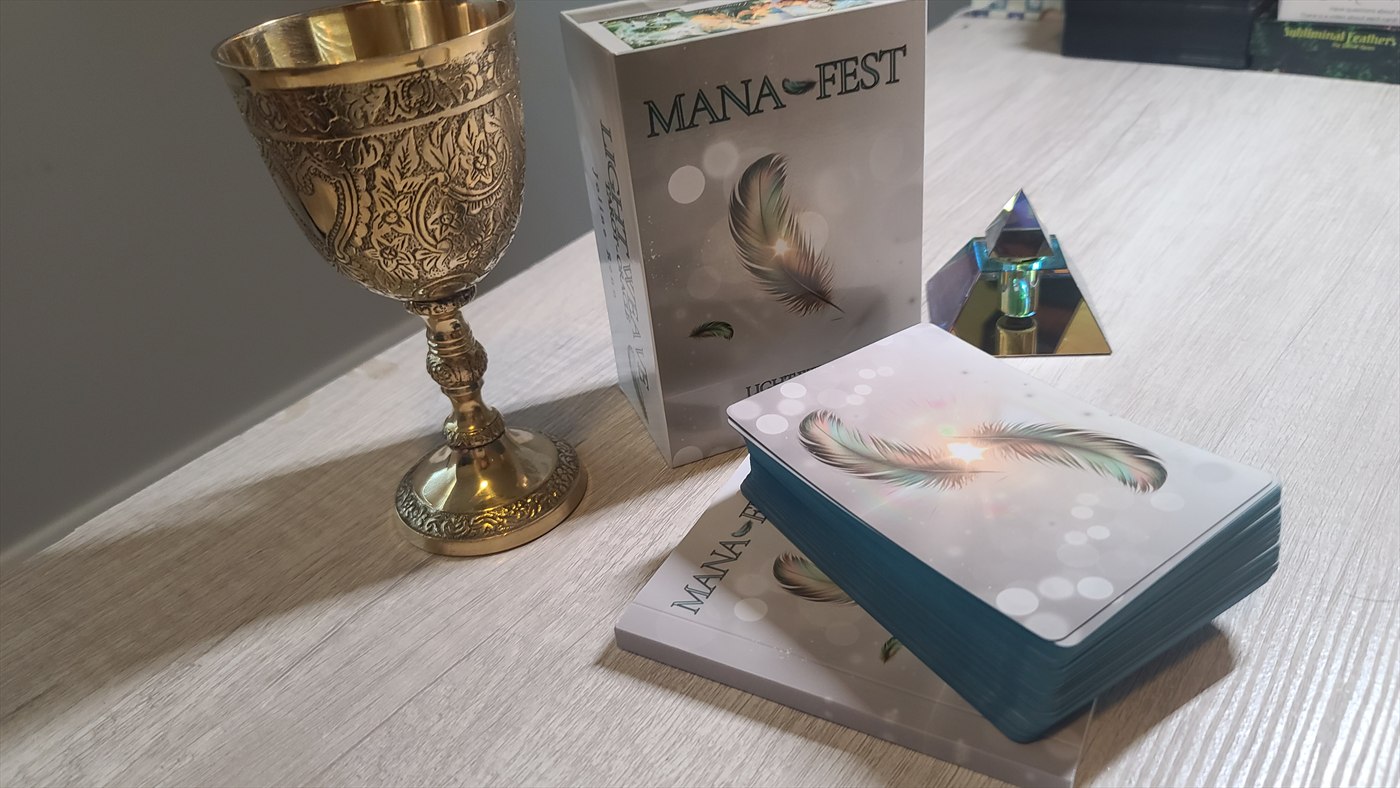
Light Weave
The bright half. Airy, feathered, reflective, built for manifestation work. 78-card oracle with a guidebook. The gentler current.
See Light Weave →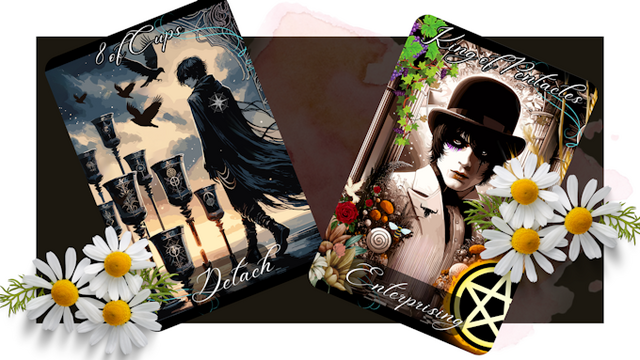
Dark Weave
The shadowed half. Dramatic, emotional, moodier. Blends tarot structure with oracle-style expansion. 78 cards with a 110-page full-colour guidebook.
See Dark Weave →The quick comparison
| Light Weave | Dark Weave | |
|---|---|---|
| Vibe | Bright, airy, reflective | Shadowed, emotional, dramatic |
| Best for | Manifestation, gentle pulls, daily uplift | Deep emotional readings, shadow work, bigger questions |
| Structure | 78-card oracle | Tarot-oracle hybrid, 110+ cards |
| Guidebook | Yes, upright and reversed meanings | Yes, full-color, 110+ pages |
| Reader it suits | Wants softness and light | Wants depth and intensity |
| Price | $36 | $36 |
Choose Light Weave if
You want a deck that feels like morning light. If your readings lean toward hope, momentum, and "what is trying to come in," Light Weave is the gentler voice. It is the deck for manifestation pulls and for readers who want encouragement without being shaken. See the Light Weave deck page for photos and the guidebook.
Choose Dark Weave if
You want a deck that goes under the surface. Dark Weave is for the readings that need weight - shadow work, grief, the things you avoid looking at. Its 110-page guidebook goes deep enough to support that kind of reading. See the Dark Weave deck page for the full card art.
Or: get both (the honest pick)
If you are drawn to both halves, they are designed to live together - the bright and the shadowed, one deck for the morning pull and one for the deeper one. The Mana-Fest pair gives you both decks and both guidebooks at one paired price, with free shipping. See the Mana-Fest pair or browse the full Calypso Star shelf.
Both decks, one pair, free shipping
Use code DECK15 for 15% off. Ships from the US.
See the Mana-Fest pair → Shop all decksOracle vs Tarot: What's the Difference?
People ask me this all the time: aren't tarot and oracle the same thing? They look similar (both are decks of pretty cards you shuffle and pull) but they read completely differently. Here's the no-jargon breakdown.
The short answer
Tarot is a structured system, usually 78 cards with fixed meanings built on centuries of tradition. Oracle is a free-form, themed deck with no set structure. Tarot is like learning a language; oracle is like journaling with pictures.
What is a tarot deck?
- 78 cards, traditionally. Two parts: the Major Arcana (22 big-life-theme cards like The Fool, The Tower) and the Minor Arcana (56 day-to-day cards in four suits).
- A fixed system. The meanings build on tradition, so two readers reading the same card are in the same ballpark.
- Best for: layered, detailed readings; deep self-reflection; learning a tradition that goes deep fast.
What is an oracle deck?
- Any number of cards, often 36 to 64, sometimes far more or fewer.
- No fixed structure. No suits, no Major/Minor split. Just a themed set of cards.
- Themed around anything, the moon, animals, affirmations, emotions, your own world.
- Meanings come from the theme plus your intuition, not a fixed rulebook.
- Best for: quick intuitive pulls, daily guidance, and a gentler, less rule-bound read.
The key differences, side by side
- Structure: Tarot is a fixed 78-card system; oracle is open, themed, any count.
- Learning curve: Tarot is steeper (you learn 78 cards plus suits); oracle is gentle, you read by feel.
- Read style: Tarot is detailed and layered; oracle is intuitive and impressionistic.
- Flexibility: Tarot carries a consistent tradition; oracle gives total creative freedom.
Which should you start with?
- Want structure, tradition, and a deep dive? Start with tarot. The Empathic Mirror Tarot Companion or Shiba Moon Tarot are gentle entry points.
- Want to trust your gut right away, no memorization? Start with an oracle. The Witchy Woman Oracle or Light Weave Mana-Fest Oracle are built for intuitive pulls.
- Not sure? Many people start with an oracle (lower pressure) and add tarot once they're comfortable.
The best of both: tarot oracles
If you can't decide between tarot and oracle, there's a third path: a tarot oracle. My Mana-Fest decks, Light Weave and Dark Weave, follow the Rider-Waite system, so the structure and card meanings are all there the way an experienced reader expects. But instead of the traditional card titles, each card carries a single keyword. That gives experienced readers the Rider-Waite rails to run on, and newer readers a clear keyword to start from, with no memorization wall and no loss of depth. It's the bridge if you want tarot structure with oracle accessibility. You can also grab both as the Mana-Fest pair.
Can you use both?
Yes, and a lot of readers do. Pull an oracle card for the day's vibe, then a tarot spread when you want depth. They complement each other: oracle for the feeling, tarot for the story.
There's no hierarchy here. The right deck is the one you'll actually pick up and use. Choose the one that pulls you, shuffle, and start.
↑ back to the listShadow Work Tarot: 8 Three-Card Combination Readings
Shadow work is reading the parts you usually look away from - and tarot combinations are perfect for it, because the hard cards change meaning beside hopeful ones. Here are 8 three-card shadow-work readings pulled with the Swirl Tarot.
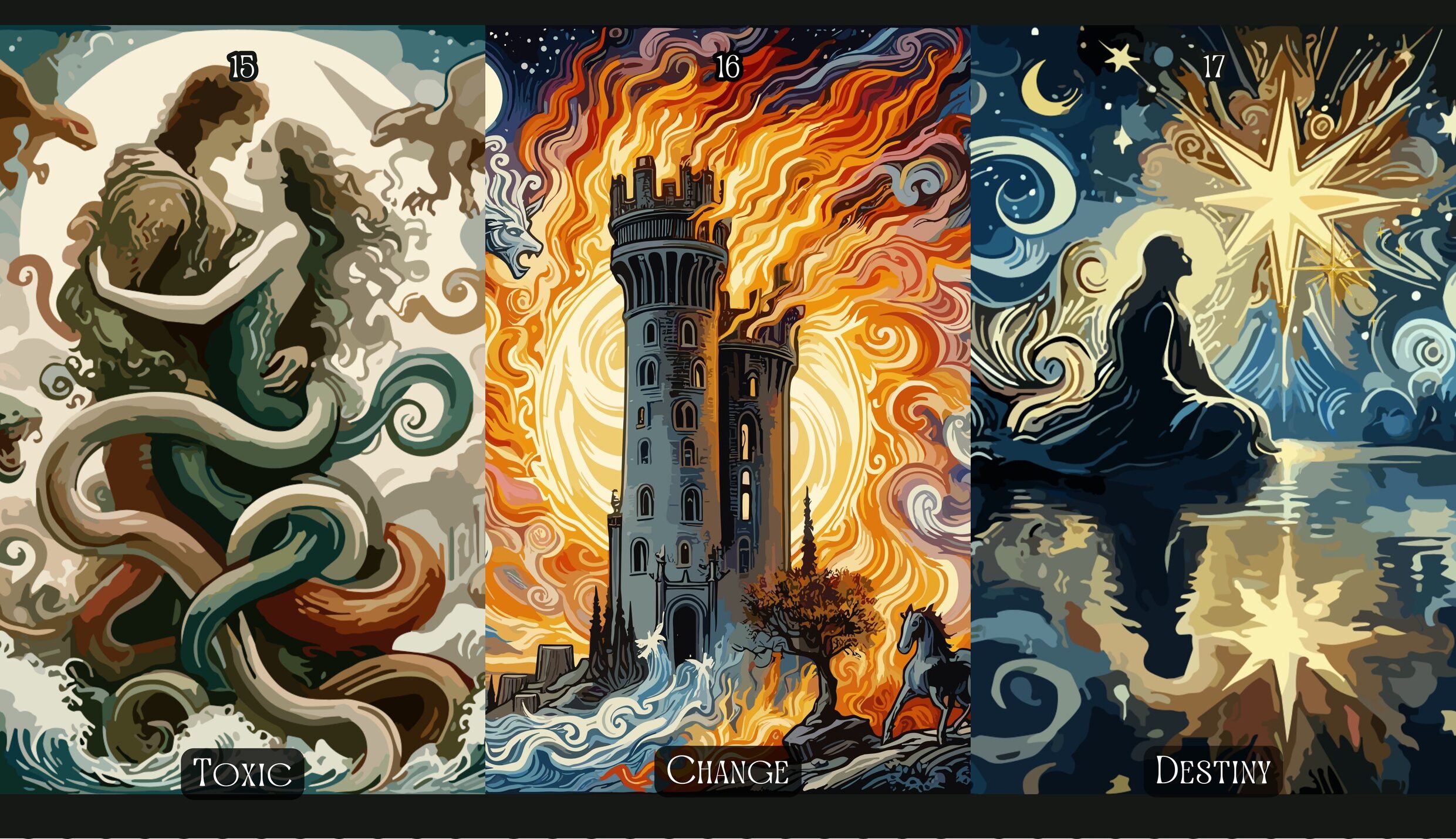
The Devil + The Tower + The Star
Confronting the shadow - the chain breaks, hope follows. The Devil is the pattern you keep; the Tower is the break; the Star is the healing direction.
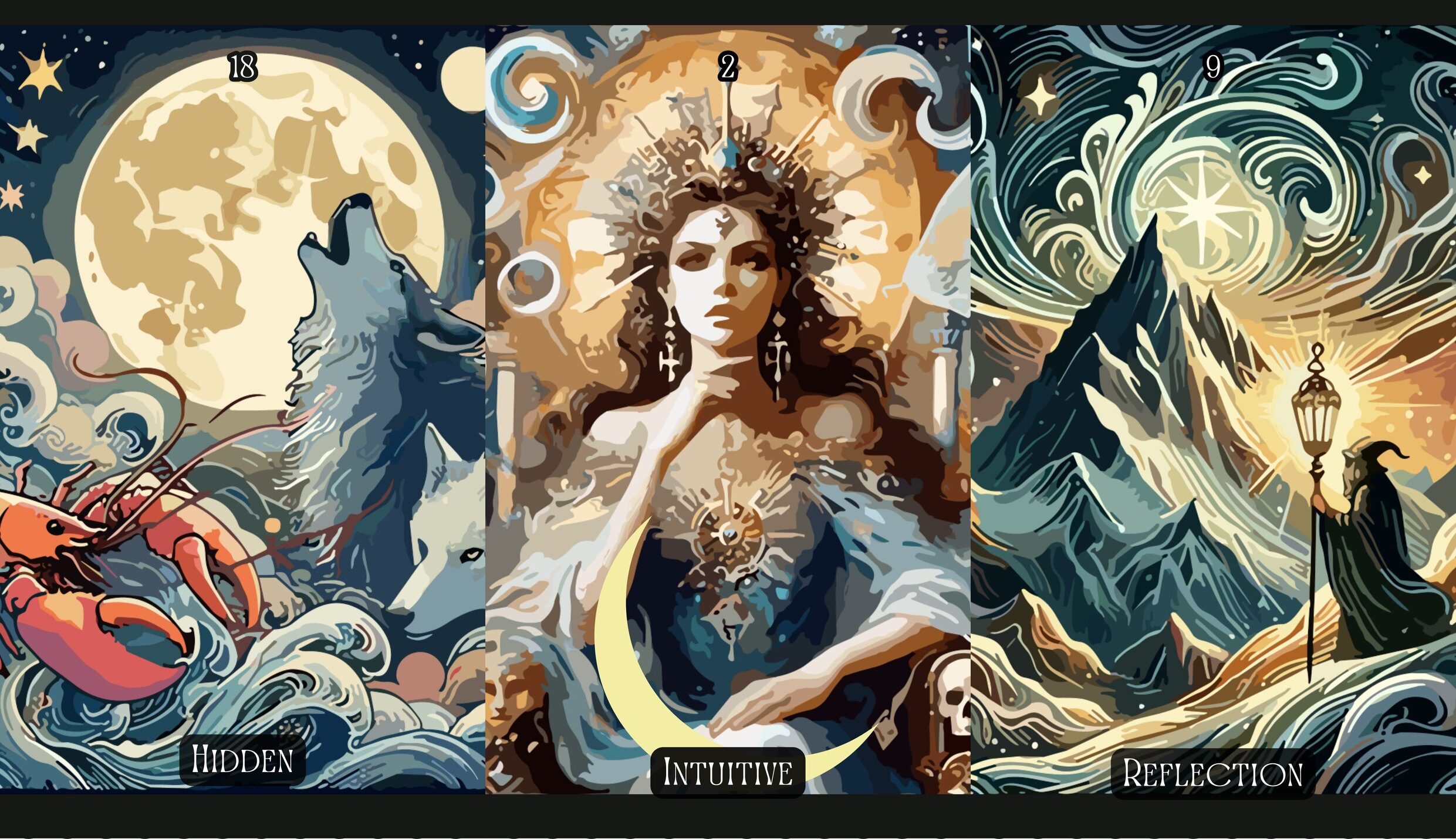
The Moon + The High Priestess + The Hermit
Sit with what is hidden; the answer is inner. The Moon is the unclear fear; the High Priestess is the knowing beneath it; the Hermit says go inward and be quiet.
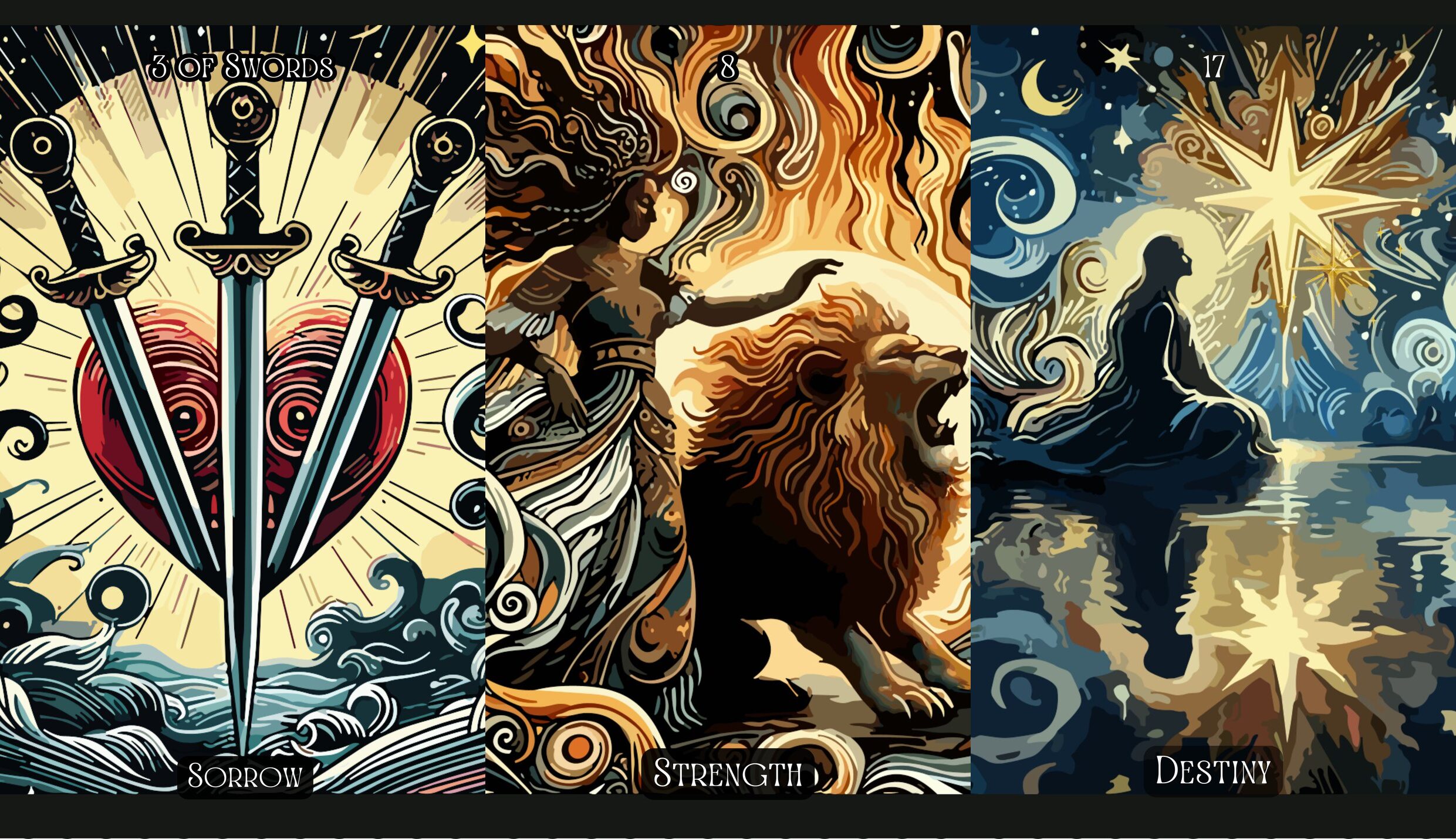
Three of Swords + Strength + The Star
Meet the wound with courage; healing comes. Three of Swords is the old hurt; Strength is the patient power to sit with it; the Star is the healing on the way.
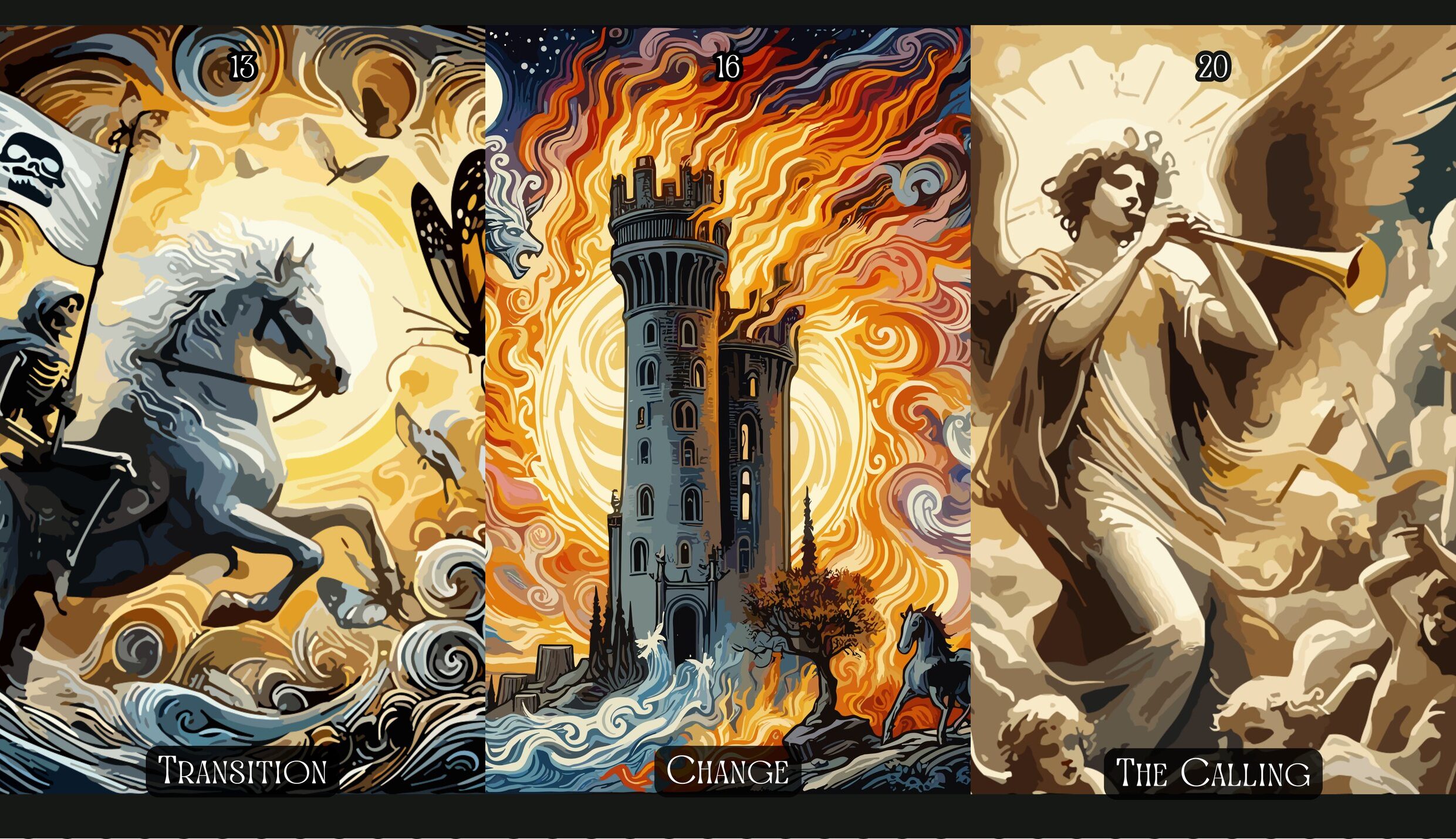
Death + The Tower + Judgement
A full shadow transformation - the old self ends, rebirth. Death ends it; the Tower clears the wreckage; Judgement calls you into the next version of yourself.
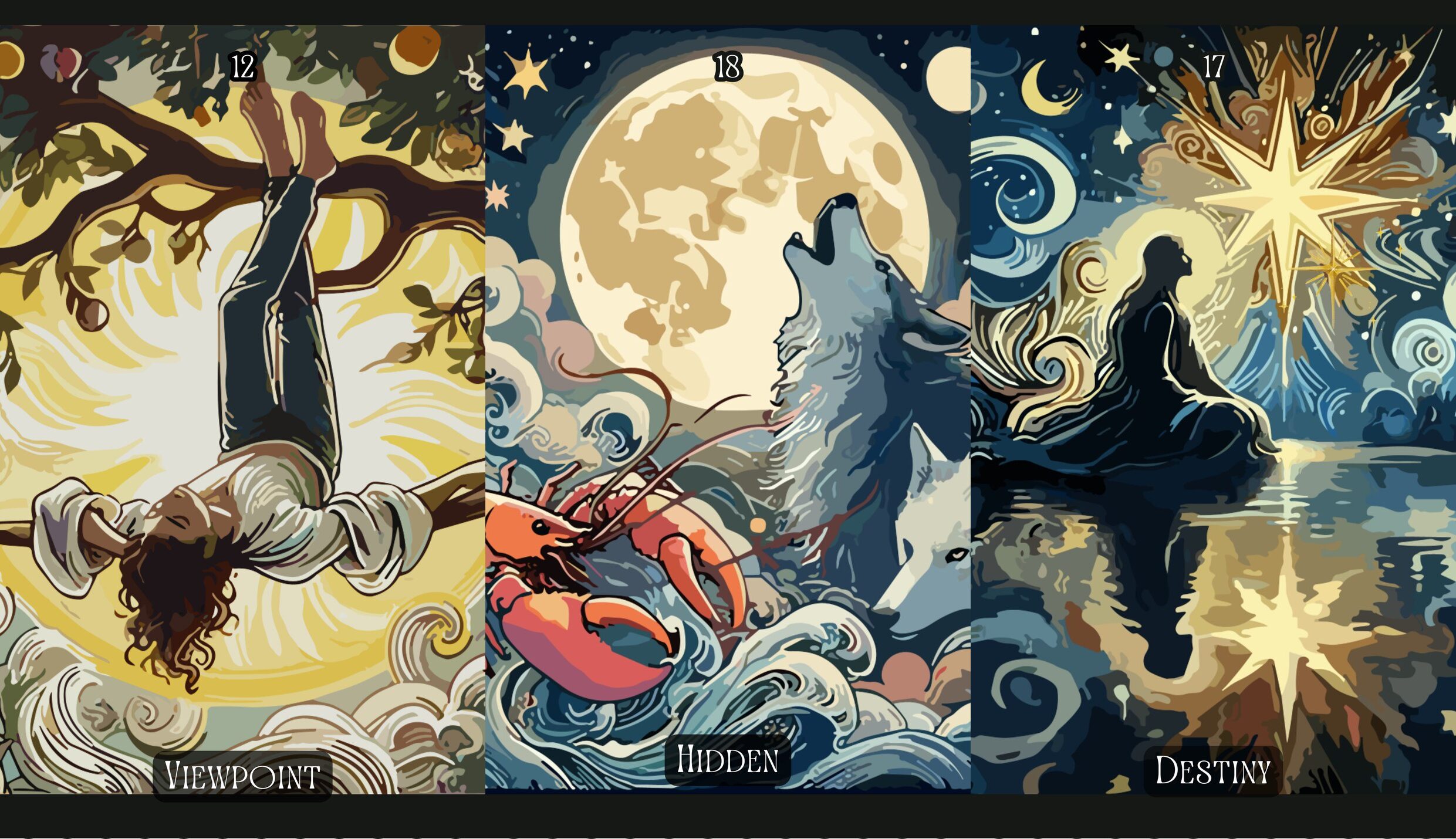
The Hanged Man + The Moon + The Star
A perspective shift on a fear; hope returns. The Hanged Man flips the view; the Moon is the fear still present; the Star is the light returning.
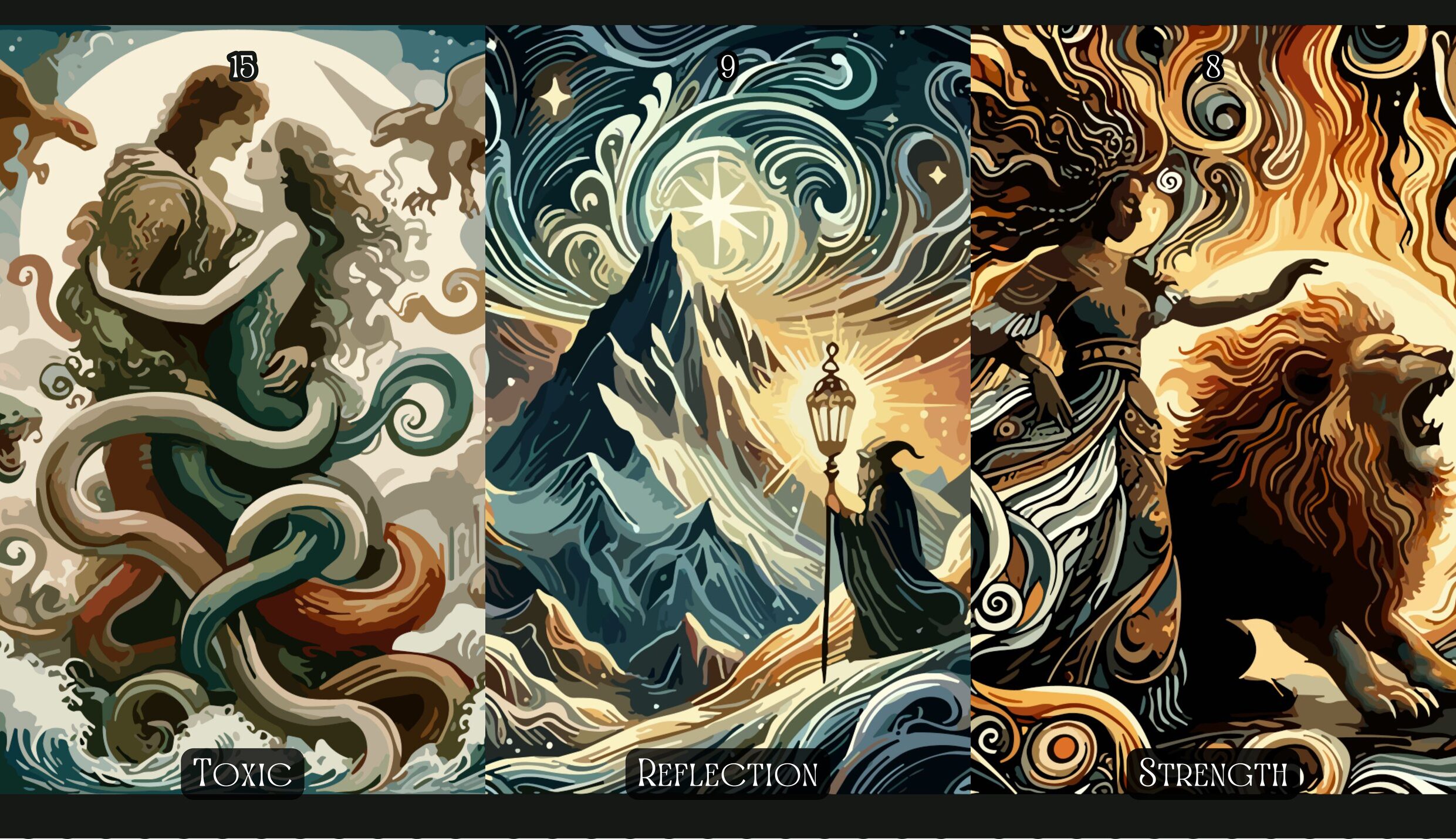
The Devil + The Hermit + Strength
Face the pattern alone, gently, with patience. The Devil is the addiction or loop; the Hermit says sit with it in private; Strength says soften, do not war with it.
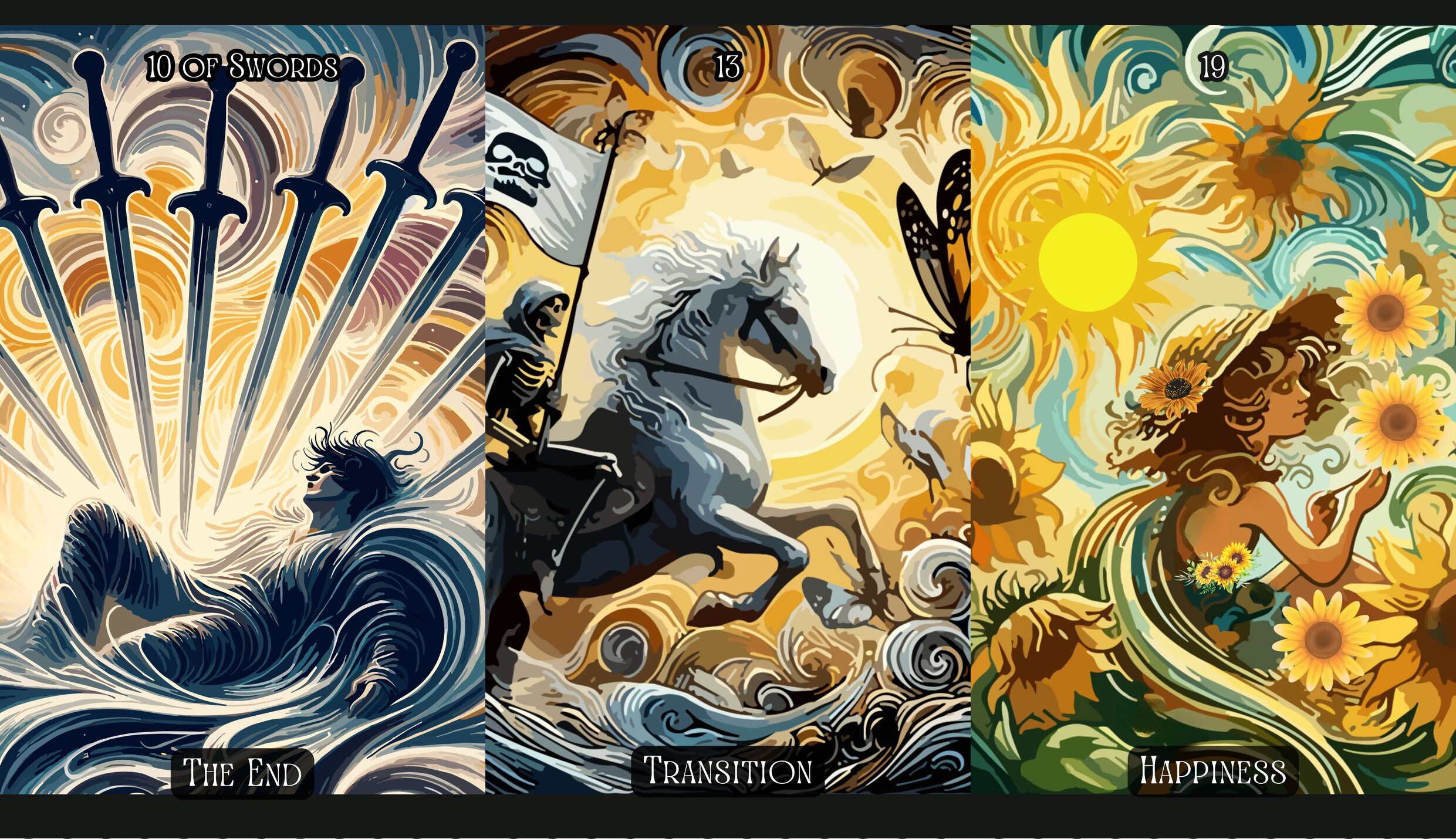
Ten of Swords + Death + The Sun
The painful ending that opens the door to joy. Ten of Swords is the rock bottom; Death is the close; the Sun is the warmth that was on the other side all along.
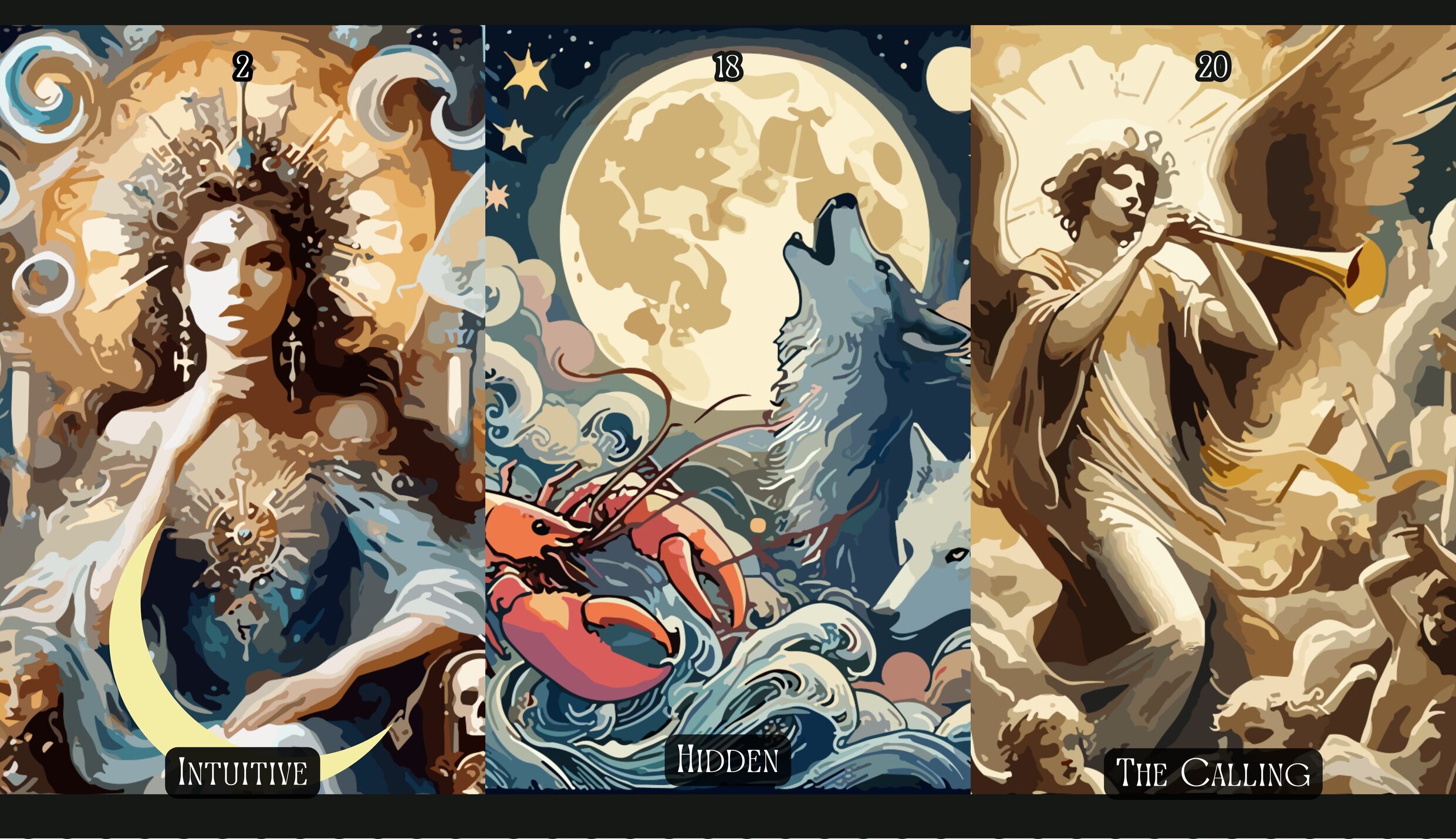
The High Priestess + The Moon + Judgement
Listen to the deep knowing; a reckoning and renewal. The High Priestess is the inner voice; the Moon is the murky material surfacing; Judgement is the renewal after you face it.
Shadow Work with Tarot: A Beginner's Guide
The shadow is the name for the parts of yourself you've tucked away, the feelings and traits you decided weren't okay to show. Shadow work is simply turning the light back toward them, gently. Tarot is a surprisingly good mirror for that work, because the cards speak in images that slip past your defenses. Here's a beginner-friendly way in.
What is the shadow, in plain terms?
The psychologist Carl Jung called it the shadow: everything you've pushed down because it didn't fit the version of yourself you wanted to be. Anger you were told was ugly. Wanting things you were taught to want quietly. The parts that feel embarrassing or like too much. It isn't evil. It's just unfelt. And unfelt things don't disappear; they run the show from backstage.
Why tarot helps with shadow work
Your conscious mind is very good at arguing. Tell yourself you're not angry and it'll agree. But a card with a charged image on it doesn't ask your opinion first. It lands in your body before your reasoning kicks in. That little jolt of recognition, the moment you think oh, that's me, is the shadow showing itself. The cards give your hidden material a way to surface without you having to confess it out loud.
A gentle shadow-work spread
Four cards, no rush. Pull them and lay them left to right:
- Card 1: What's in my shadow right now? Whatever comes up, don't argue with it.
- Card 2: What does this part want? Shadow parts usually want acknowledgment, not action.
- Card 3: What is it trying to teach or protect me? Even the parts you dislike started as a strategy to keep you safe.
- Card 4: How do I begin to integrate it? Integration isn't fixing. It's letting the part have a seat at the table.
For more spreads that look inward, see Tarot Spreads for Self-Reflection.
How to sit with difficult cards
- A scary card isn't a prediction. The Tower isn't announcing disaster. It usually points at something already shifting. Treat it as an invitation to look, not a verdict.
- Notice the flinch, then breathe. The discomfort is the work. You don't have to fix it in the moment.
- Write it down. Getting it on paper takes it out of the loop in your head.
Keep it safe and paced
Shadow work is real work. A few guidelines so it stays helpful:
- Start small. One card, one question. Don't try to excavate your whole childhood on a Tuesday night.
- If it gets heavy, stop. You can close the deck and come back another day. Nothing is lost.
- Therapy is the right tool for the deep stuff. Tarot is a mirror, not a substitute for a professional when the material is big.
You don't have to conquer your shadow. You just have to stop pretending it isn't there. Pull a card, notice what you feel, and let that be enough for today.
↑ back to the listTarot Card Combinations: 20 Three-Card Mini Readings
The hardest part of tarot is not single cards - it is what happens when two or three meet. The same card means something different next to the Tower than it does next to the Sun. Here are 20 three-card mini readings that show how cards combine and modify each other, so you can start reading combinations instead of memorizing keywords. Pull these with any Rider-Waite-based deck (we love the Swirl Tarot and the Shiba Moon Tarot for this). New to combinations? Read this alongside our major arcana meanings.
How to read a three-card combination
Lay the three cards left to right. Read them as one sentence, not three separate words: the first card is the situation or the spark, the middle card is the action or turning point, and the last card is where it lands. Then ask how each card changes the meaning of the one next to it. That back-and-forth is the whole skill. Here are 20 to practice on.
1. The Fool + The Magician + The Star
A bold new beginning - and this time you have the tools and the hope to see it through. The Fool says leap; the Magician says you have everything you need in your hands; the Star says the path is lit. Stop waiting for the perfect moment.
2. The Tower + Death + The Sun
A sudden ending clears the way for real happiness. The Tower shakes loose what was doomed anyway; Death finishes the transformation; the Sun brings warmth and clarity on the other side. It hurts, and then it is genuinely good.
3. The Lovers + Two of Cups + Ten of Cups
A mutual connection with staying power. The Lovers is the choice; Two of Cups is the meeting of equals; Ten of Cups is the lasting harmony. This is the one you build a life around.
4. The Emperor + The Chariot + Six of Wands
Disciplined drive that wins and earns recognition. The Emperor sets the structure; the Chariot pushes it forward with control; Six of Wands is the earned victory. Success here comes from discipline, not luck.
5. The Hermit + The High Priestess + Four of Swords
Step back and listen inward. The Hermit withdraws; the High Priestess holds the knowing you cannot logic your way to; Four of Swords says rest is part of the work. The answer is internal and it needs quiet.
6. The Devil + The Tower + The Star
Breaking a toxic hold - painful, freeing, and hopeful. The Devil is the chain you helped forge; the Tower snaps it; the Star is the relief and direction after. Leave the thing that was never good for you.
7. Three of Swords + Strength + The Star
Heartbreak met with courage and healing. Three of Swords is the wound; Strength is the gentle, patient power to sit with it; the Star is the healing on the way. You do not have to harden to survive this.
8. The Magician + Ace of Pentacles + Ten of Pentacles
Turn an idea into real, lasting wealth. The Magician channels intent; Ace of Pentacles is the first tangible opportunity; Ten of Pentacles is the legacy it grows into. Start the thing, then build it to last.
9. The Moon + Seven of Swords + The Hermit
Trust is shaky - investigate, do not act on fear. The Moon is the confusion; Seven of Swords says someone, maybe you, is not showing the whole picture; the Hermit says get quiet and find the truth before you move.
10. The Empress + Three of Cups + Nine of Cups
Abundance, celebration, emotional fullness. The Empress is growth and pleasure; Three of Cups is the people you celebrate with; Nine of Cups is the wish come true. Enjoy this - it is real.
11. The Wheel of Fortune + The Fool + Ace of Wands
A lucky turn sparks a brave new passion. The Wheel shifts the odds; the Fool says be willing to look silly; Ace of Wands is the spark. Say yes while the door is open.
12. Five of Pentacles + The Star + Six of Pentacles
Hard times, then help and hope arrive. Five of Pentacles is the cold stretch; the Star is the hope that keeps you going; Six of Pentacles is the support that shows up. You are not as alone as it feels.
13. Justice + The Hierophant + Ten of Swords
A fair, formal ending - close the book cleanly. Justice balances it; the Hierophant formalizes it; Ten of Swords is the definitive close. Stop dragging the dead thing forward.
14. The Chariot + Knight of Wands + Eight of Wands
Fast, determined forward momentum. The Chariot is focused will; Knight of Wands is the bold push; Eight of Wands is speed. Move now, refine later.
15. Four of Cups + The Hanged Man + The Star
Boredom shifts into a new perspective and renewed hope. Four of Cups is the discontent; the Hanged Man flips your view; the Star is the renewed direction. The rut is trying to show you something.
16. Two of Wands + Three of Pentacles + The Emperor
Plan, collaborate, and build something solid. Two of Wands is the vision; Three of Pentacles is the teamwork; the Emperor is the structure that holds it. Do not do this one alone.
17. The Moon + The High Priestess + The Star
Sit with the uncertainty - intuition leads to hope. The Moon is the not-knowing; the High Priestess is the inner voice; the Star is the light returning. You do not need to know yet.
18. Seven of Cups + The Lovers + Two of Pentacles
Too many options - choose with the heart and then balance the load. Seven of Cups is the overwhelm; the Lovers is the values-based choice; Two of Pentacles is juggling what follows. Pick, then manage.
19. Death + The Tower + Judgement
A total transformation - the old self is over, rebirth follows. Death ends it; the Tower clears the wreckage; Judgement calls you into the next version of yourself. Let yourself become it.
20. Ace of Wands + The Magician + The Sun
A creative spark, the will to make it real, and joy on the other side. Ace of Wands is the idea; the Magician is the execution; the Sun is the success. Make the thing.
Tarot Card Meanings: The Minor Arcana & 4 Suits
While the Major Arcana cards represent significant life themes and karmic lessons, the 56 cards of the Minor Arcana reflect daily events, personal interactions, and practical decisions. Here is a clear breakdown of the four suits.
1. Suit of Wands (Element of Fire)
Wands govern passion, inspiration, creative projects, energy, and willpower. When Wands dominate a reading, it points to new initiatives, ambition, and personal drive.
2. Suit of Cups (Element of Water)
Cups govern emotions, relationships, intuition, artistic expression, and matters of the heart. Pulling Cups signifies feelings, connections, and internal emotional processing.
3. Suit of Swords (Element of Air)
Swords govern thought, communication, intellect, logic, and mindset challenges. Swords highlight clarity, truth, mental conflict, and decision-making.
4. Suit of Pentacles (Element of Earth)
Pentacles govern material life, career, finances, home, and physical health. Pentacles represent manifestation, security, practical effort, and long-term stability.
↑ back to the listTarot Card Meanings: The Major Arcana, Plain Language
The major arcana are the 22 named cards in a tarot deck, the big archetypes that show up when something meaningful is happening. Here are short, plain-language meanings for each one, written for people who actually want to use the cards, not memorize a textbook. (Minor arcana, the suits and court cards, coming next.)
0 - The Fool
A leap of faith and a fresh start. Beginner energy, spontaneity, saying yes before you talk yourself out of it.
1 - The Magician
You have everything you need. Willpower, focus, the ability to make it happen by acting, not just wishing.
2 - The High Priestess
Trust your gut. Intuition, the subconscious, a quiet answer you already sense but have not said out loud.
3 - The Empress
Abundance and nurturing. Creativity, growth, comfort, making things and people flourish.
4 - The Emperor
Structure and boundaries. Authority, stability, the discipline to hold the frame you built.
5 - The Hierophant
Tradition and learning. Guidance, a teacher or system, doing it the established way for now.
6 - The Lovers
A choice of the heart. Alignment of values, partnership, choosing what (or who) actually fits.
7 - The Chariot
Willpower in motion. Focus, drive, holding two opposing forces together to get where you are going.
8 - Strength
Gentle power. Patience, self-mastery, taming the loud thing inside with calm, not force.
9 - The Hermit
Go inward. Solitude, soul-searching, the answer that only comes when you sit quietly with it.
10 - Wheel of Fortune
Cycles and change. Luck turning, a phase ending, momentum you did not cause but get to ride.
11 - Justice
Fairness and truth. Cause and effect, accountability, the outcome that matches what was actually done.
12 - The Hanged Man
Pause and reframe. Surrender, seeing it upside down, a small sacrifice that shifts everything.
13 - Death
Endings and transformation. Not literal death, a chapter closing so a new one can start. Let it go.
14 - Temperance
Balance and blending. Patience, moderation, mixing opposites until they become something stable.
15 - The Devil
Attachment and shadow. The habit, the chain, the thing you keep doing that you know keeps you stuck.
16 - The Tower
Sudden change. The shake-up that breaks what was unstable. Rough in the moment, freeing after.
17 - The Star
Hope and renewal. Healing after the storm, optimism, faith that the path is still there.
18 - The Moon
Uncertainty and illusion. The subconscious, anxiety, things not being what they look like. Do not react fast.
19 - The Sun
Joy and clarity. Success, vitality, warmth, everything out in the open and going well.
20 - Judgement
A reckoning and a fresh call. Forgiveness, rising to the next version of yourself, answering what is asked.
21 - The World
Completion. A cycle fulfilled, integration, the satisfying end of a long arc before the next begins.
How to actually use these
Do not read these as fixed rules. A card means something a little different in your reading than in someone else’s, because the question and the surrounding cards change it. Use these as a starting point, then notice what the card makes you feel. If you are just starting, a one-card-a-day practice is the easiest way to learn the majors by heart.
↑ back to the listTarot Combinations for Career & Money: 8 Three-Card Readings
Career and money questions are where tarot combinations get practical - cards about action next to cards about money tell you both what to do and where it lands. Here are 8 three-card career and money readings pulled with the Swirl Tarot.
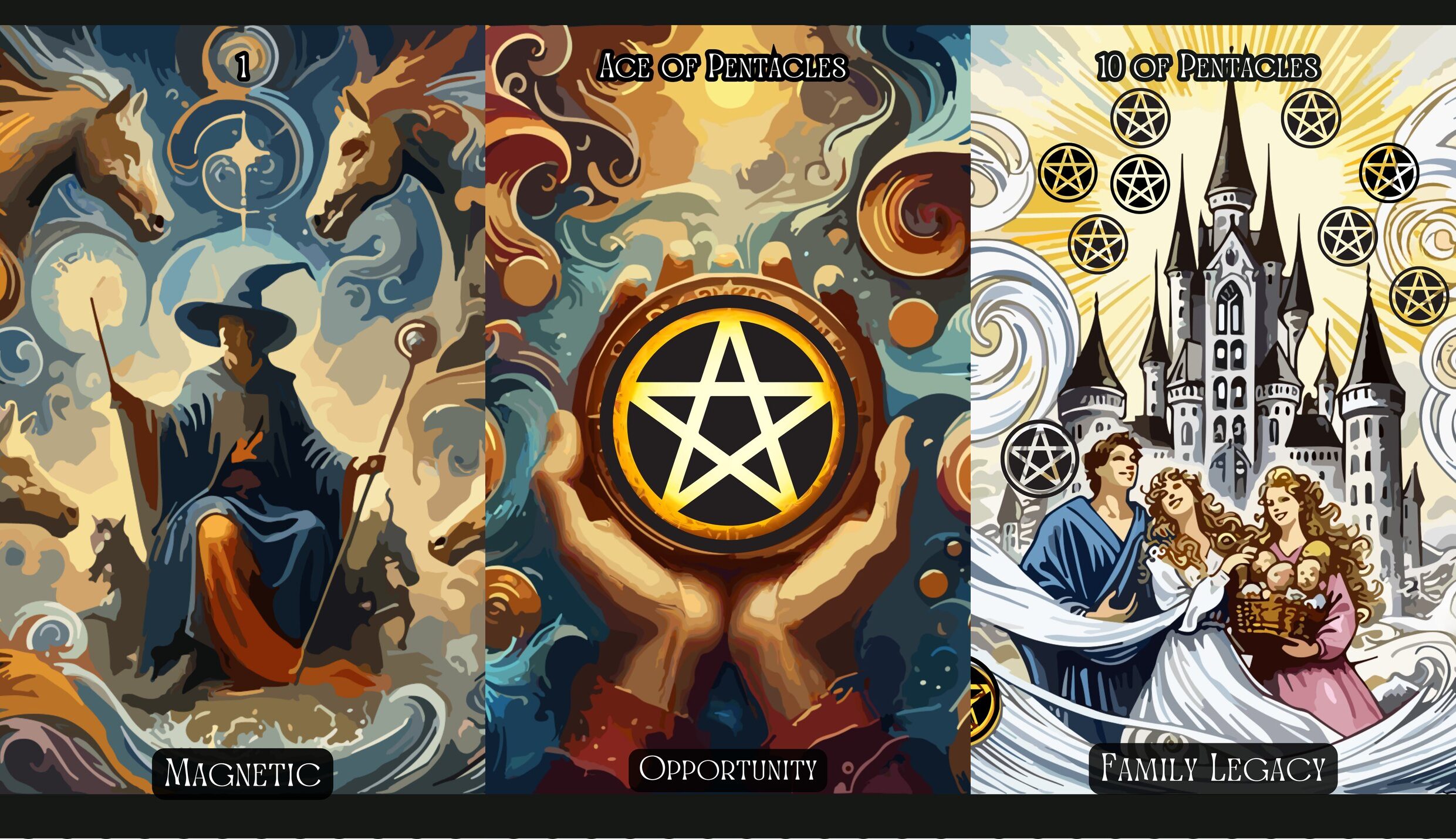
The Magician + Ace of Pentacles + Ten of Pentacles
Turn an idea into lasting wealth. The Magician channels intent; Ace of Pentacles is the first real opportunity; Ten of Pentacles is the legacy it grows into.
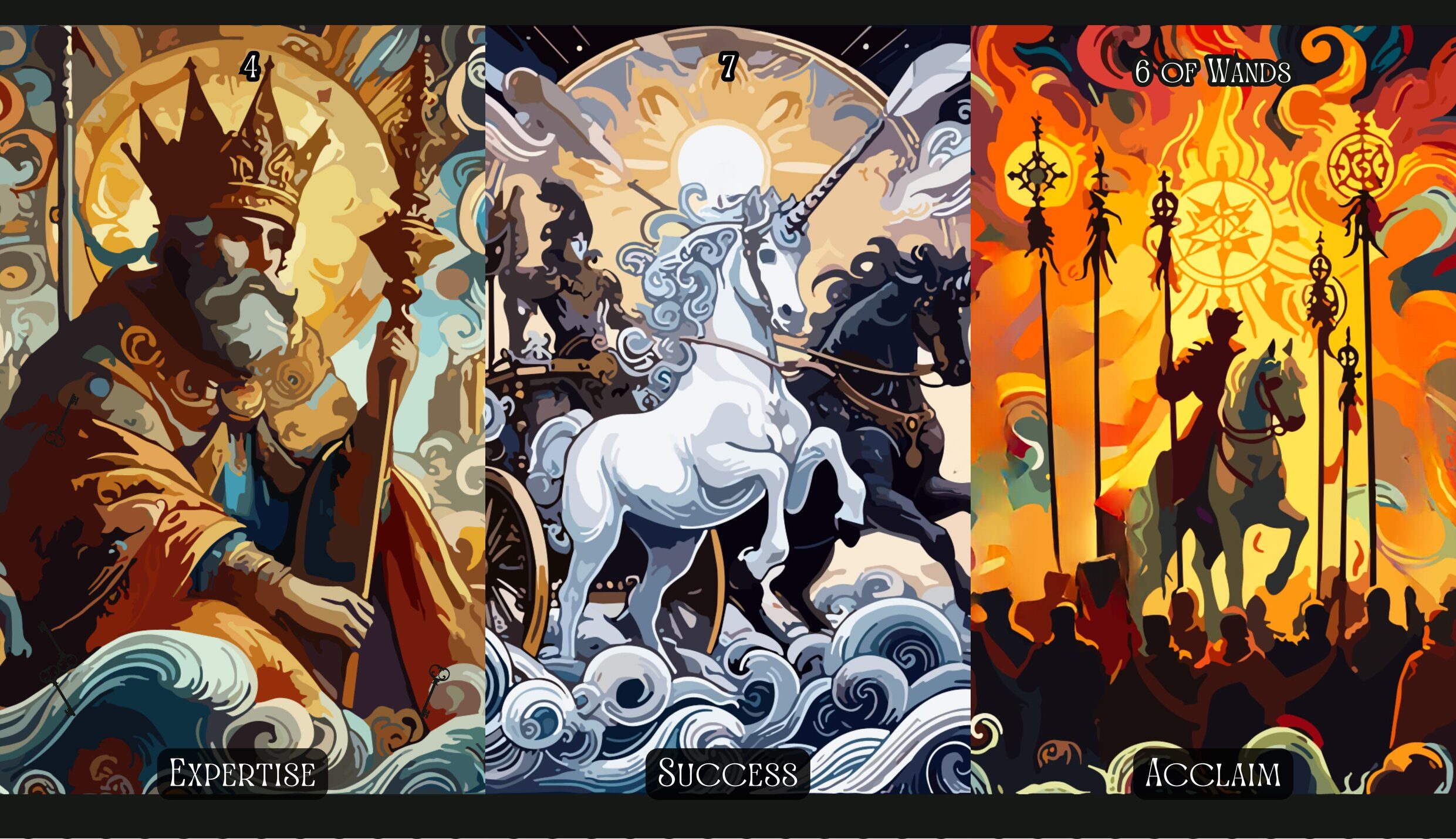
The Emperor + The Chariot + Six of Wands
Disciplined drive that wins recognition at work. The Emperor is the structure; the Chariot is the focused push; Six of Wands is the earned victory and visibility.
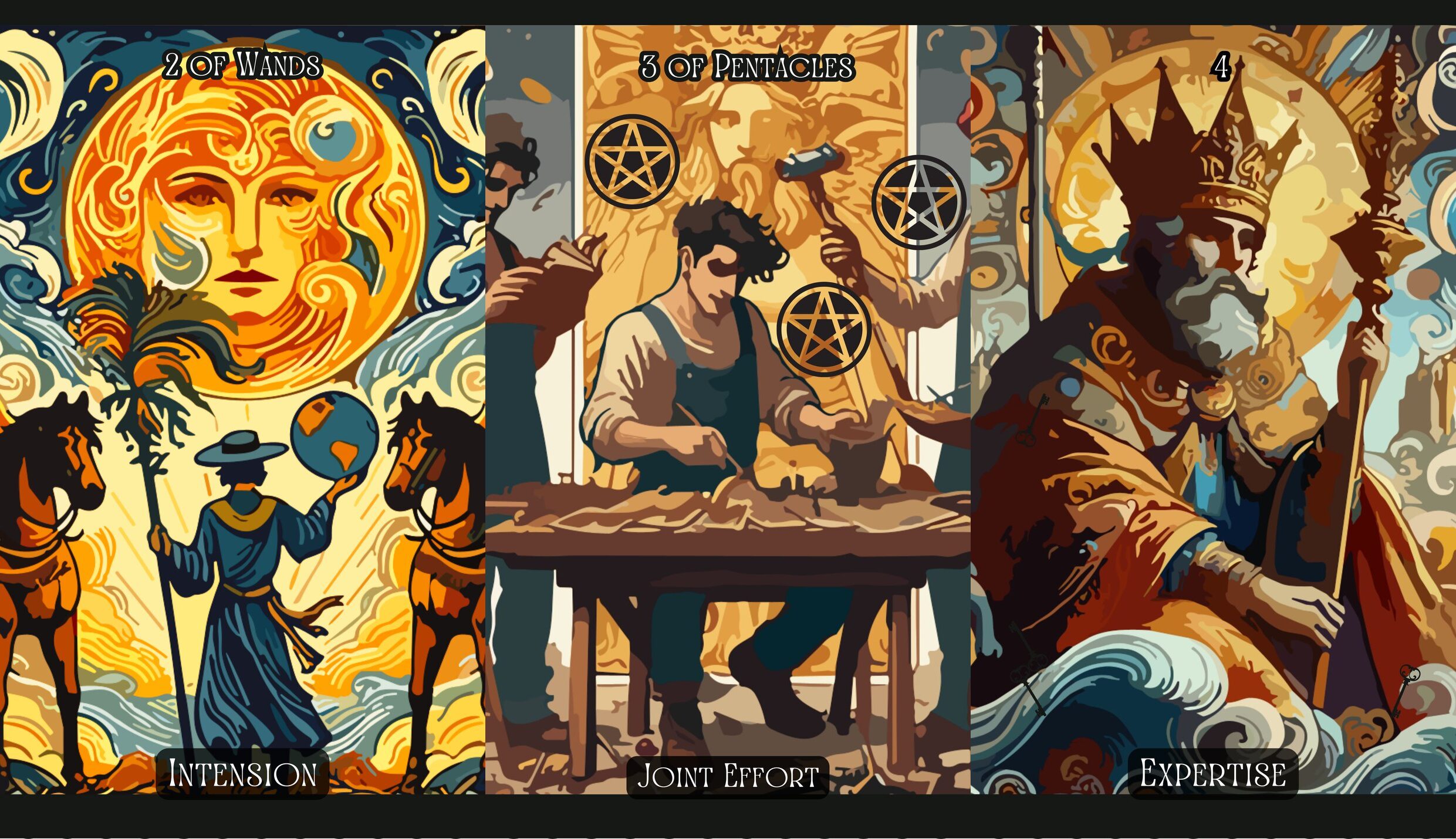
Two of Wands + Three of Pentacles + The Emperor
Plan, collaborate, build something solid. Two of Wands is the vision; Three of Pentacles is the teamwork; the Emperor is the structure that holds it.
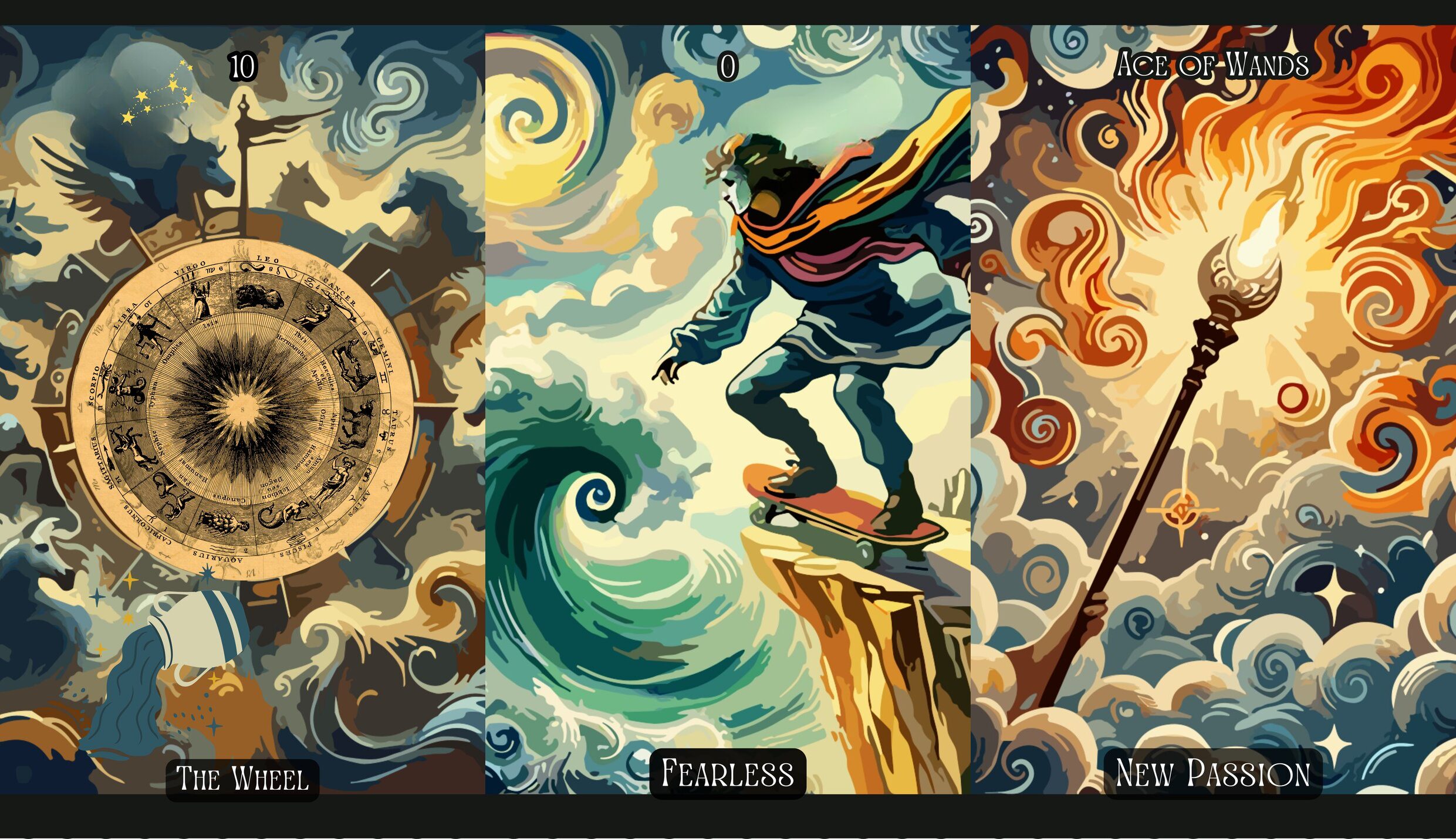
The Wheel of Fortune + The Fool + Ace of Wands
A lucky break sparks a bold new venture. The Wheel shifts the odds; the Fool says be willing to leap; Ace of Wands is the spark. Say yes while the door is open.
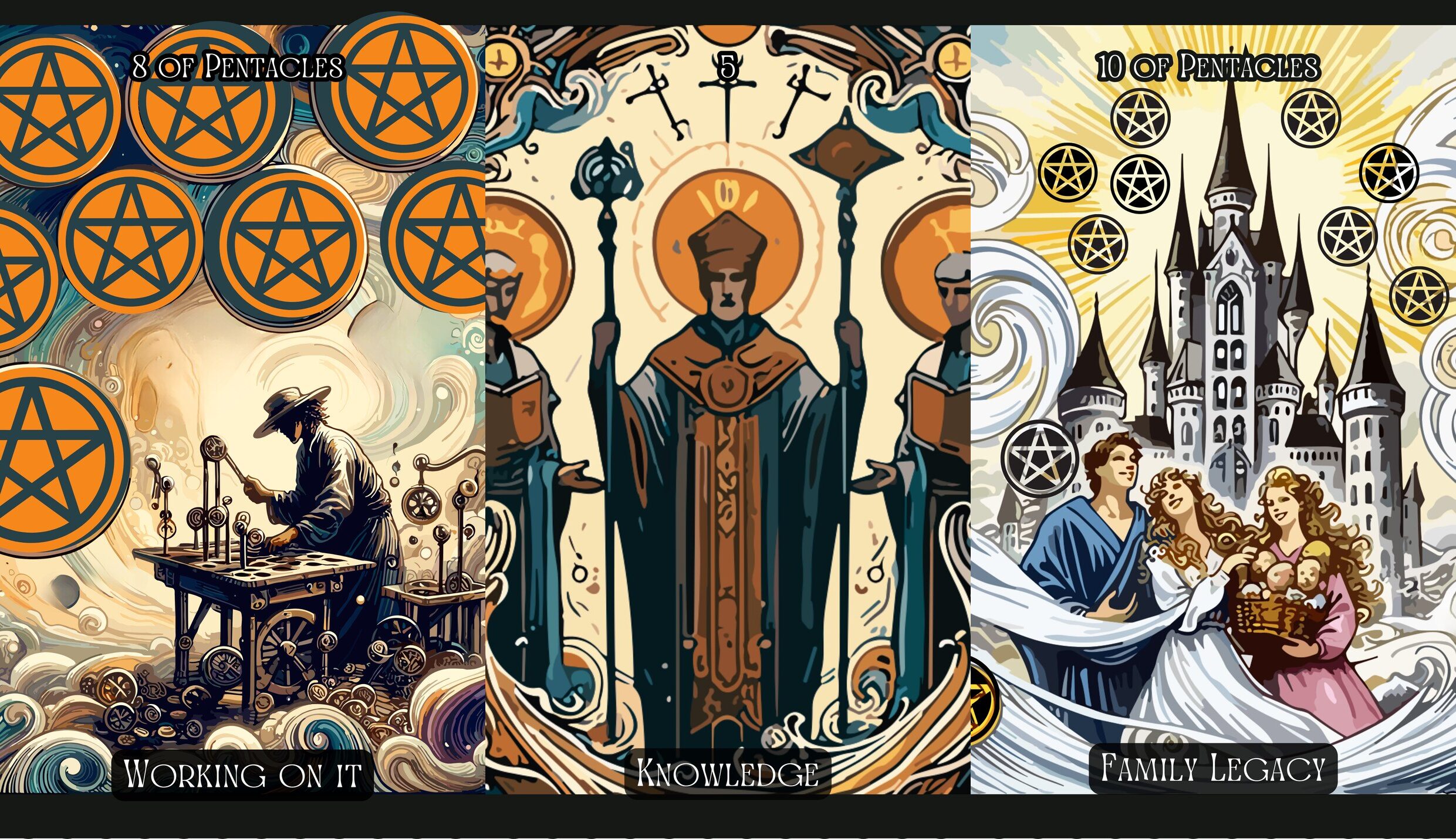
Eight of Pentacles + The Hierophant + Ten of Pentacles
Master the craft, learn from a mentor, build legacy. Eight of Pentacles is the steady skill; the Hierophant is the teacher or system; Ten of Pentacles is the long-term payoff.
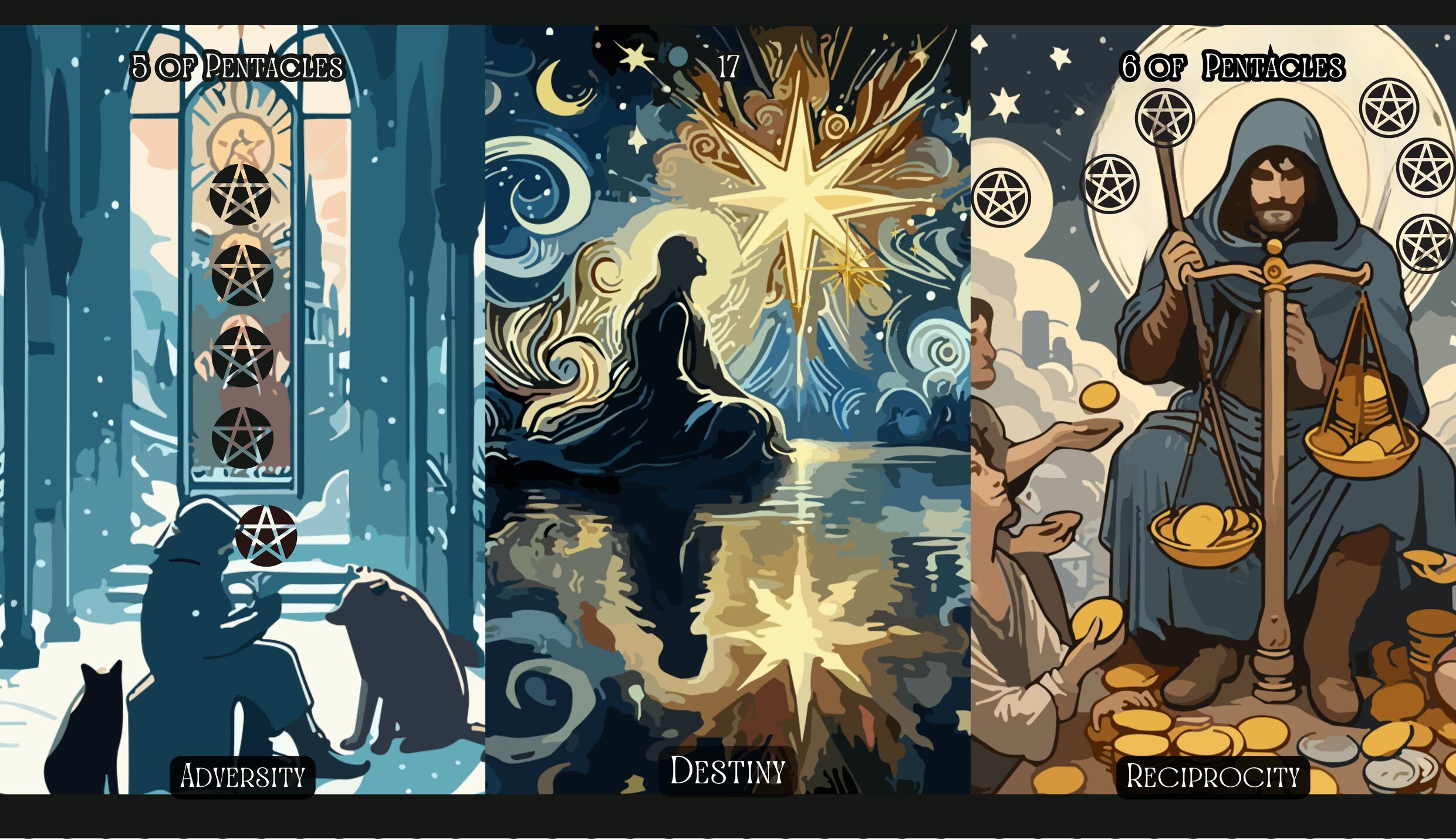
Five of Pentacles + The Star + Six of Pentacles
A money low, then help and hope arrive. Five of Pentacles is the hard stretch; the Star is the hope that keeps you going; Six of Pentacles is the support that shows up.
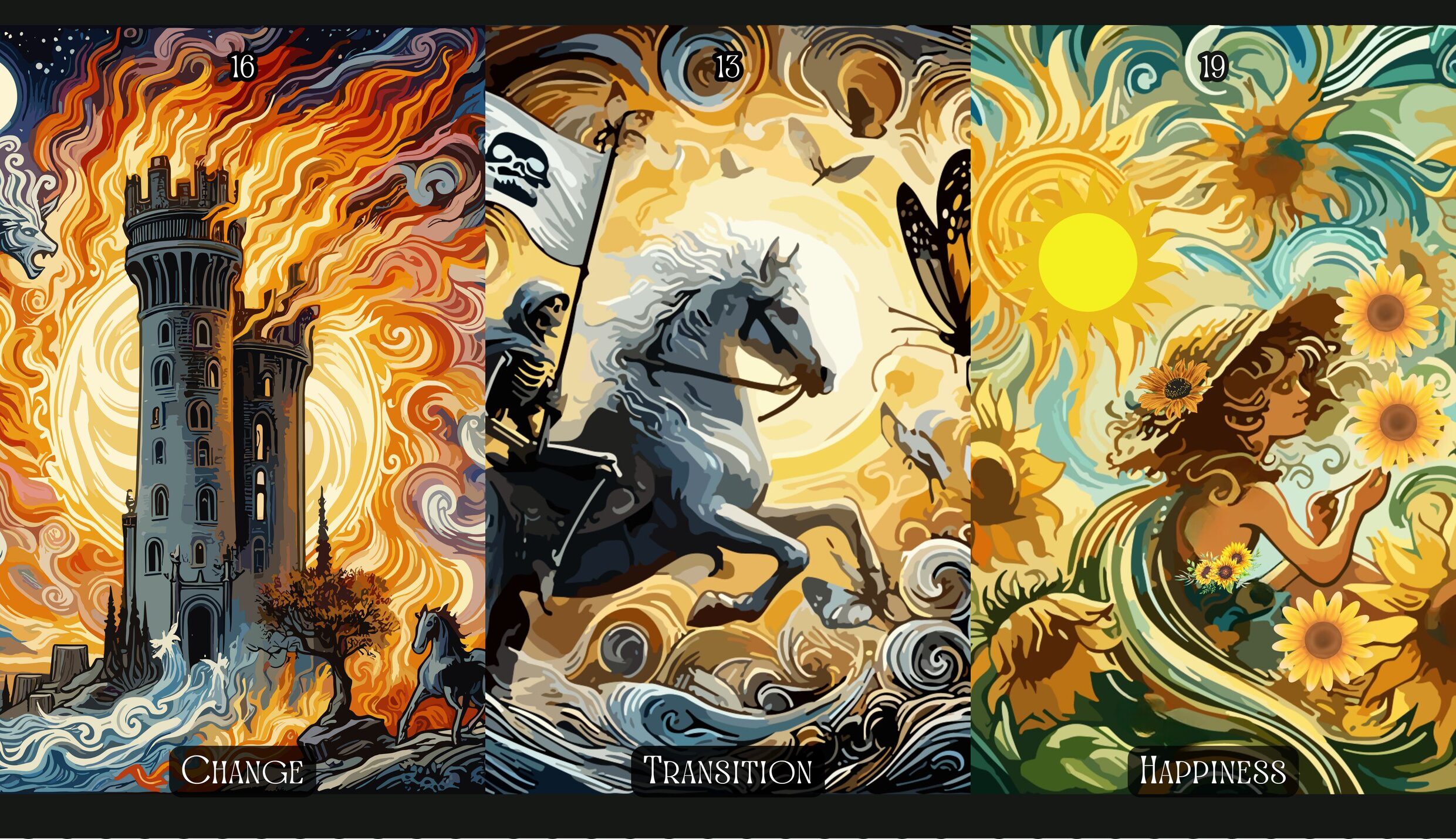
The Tower + Death + The Sun
A career collapse that frees you for something better. The Tower is the shake-up; Death is the old path ending; the Sun is the genuine fit on the other side.

Ace of Pentacles + The Magician + The Sun
A new opportunity, the will to seize it, success. Ace of Pentacles is the offer; the Magician is the execution; the Sun is the win. Take it and run.
Tarot Combinations for Love: 8 Three-Card Mini Readings
Love is where tarot combinations matter most - the same cards mean very different things next to the Lovers than next to the Tower. Here are 8 three-card mini readings for love and relationships, pulled with the Rider-Waite-based Swirl Tarot. New here? Start with our guide to reading tarot combinations.
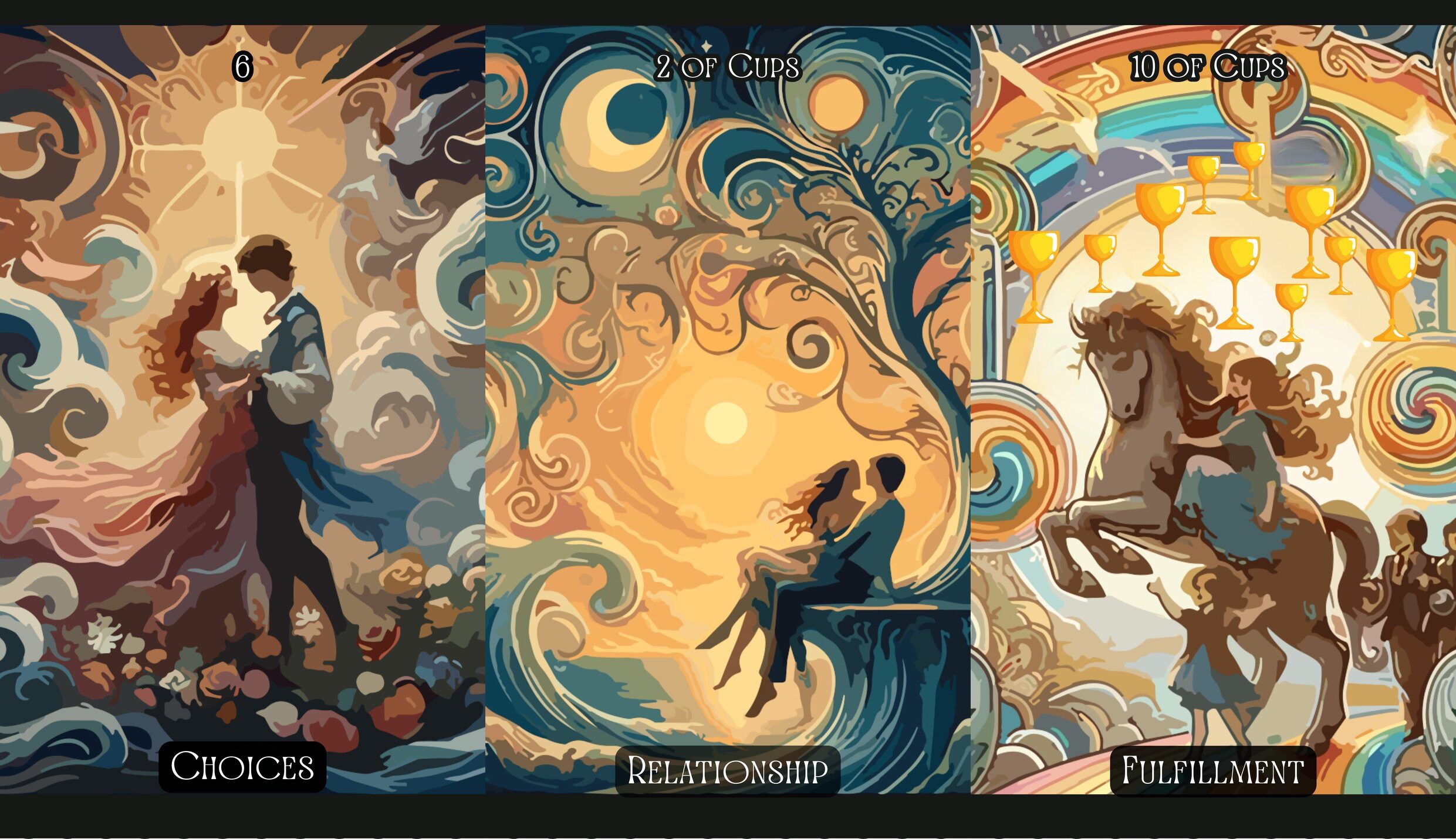
The Lovers + Two of Cups + Ten of Cups
A mutual connection heading toward lasting love. The Lovers is the choice; Two of Cups is the meeting of equals; Ten of Cups is the harmony you build a life around.
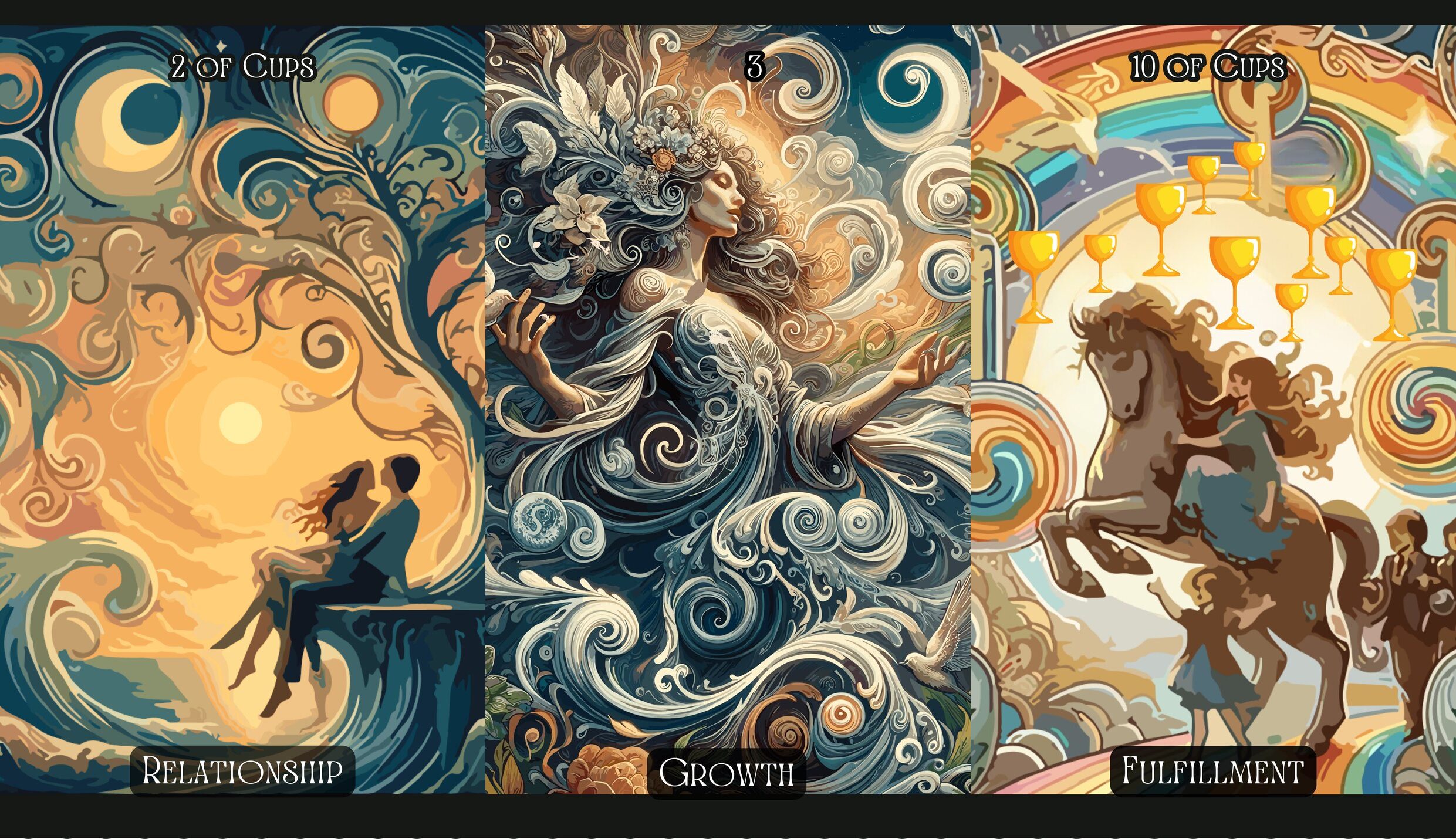
Two of Cups + The Empress + Ten of Cups
A partnership that grows into abundance and family. Two of Cups is the bond; the Empress is growth and warmth; Ten of Cups is the lasting home it becomes.
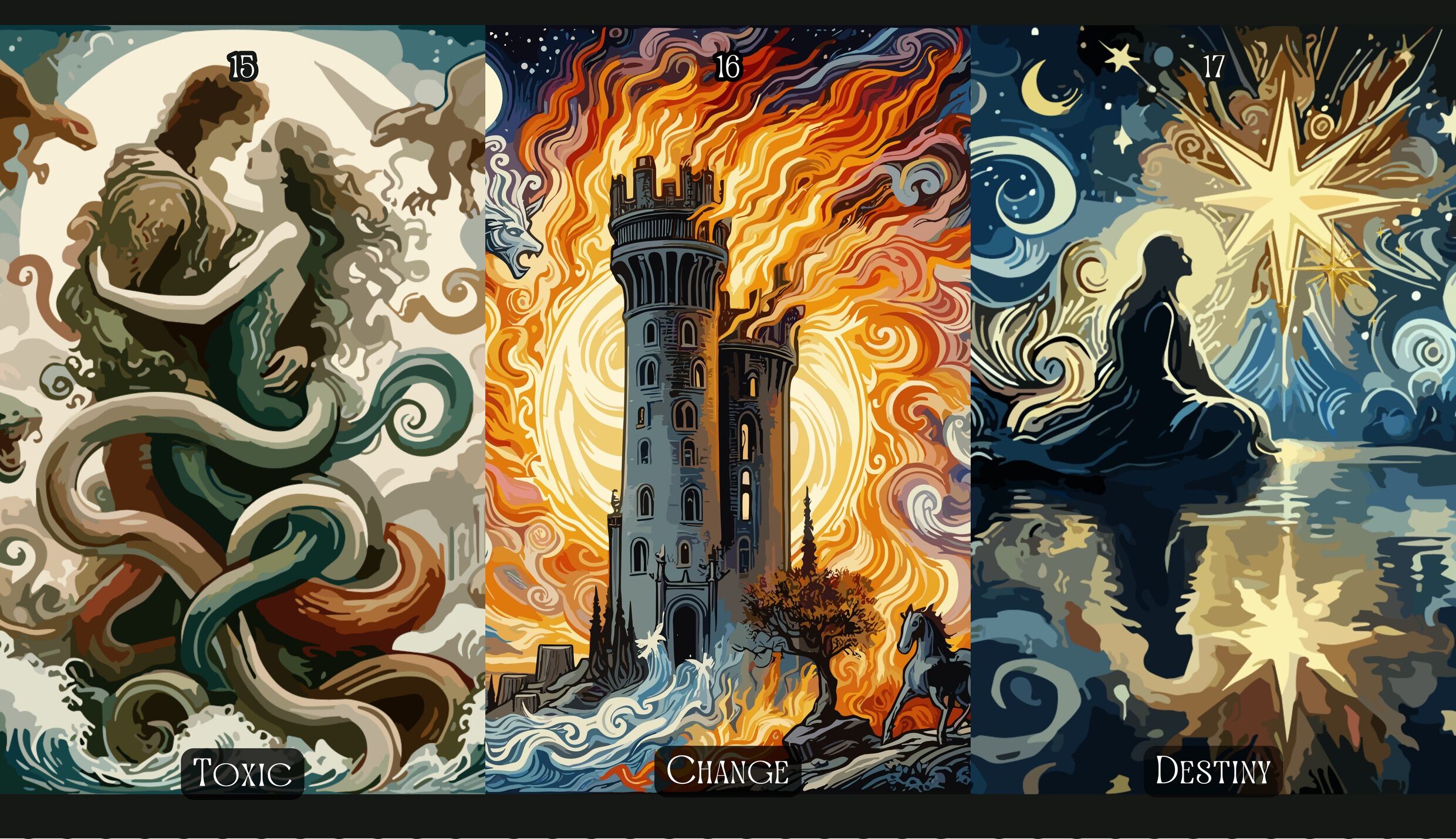
The Devil + The Tower + The Star
Breaking a toxic pattern in love - freedom and hope after. The Devil is the unhealthy bond; the Tower breaks it; the Star is the relief and direction after.
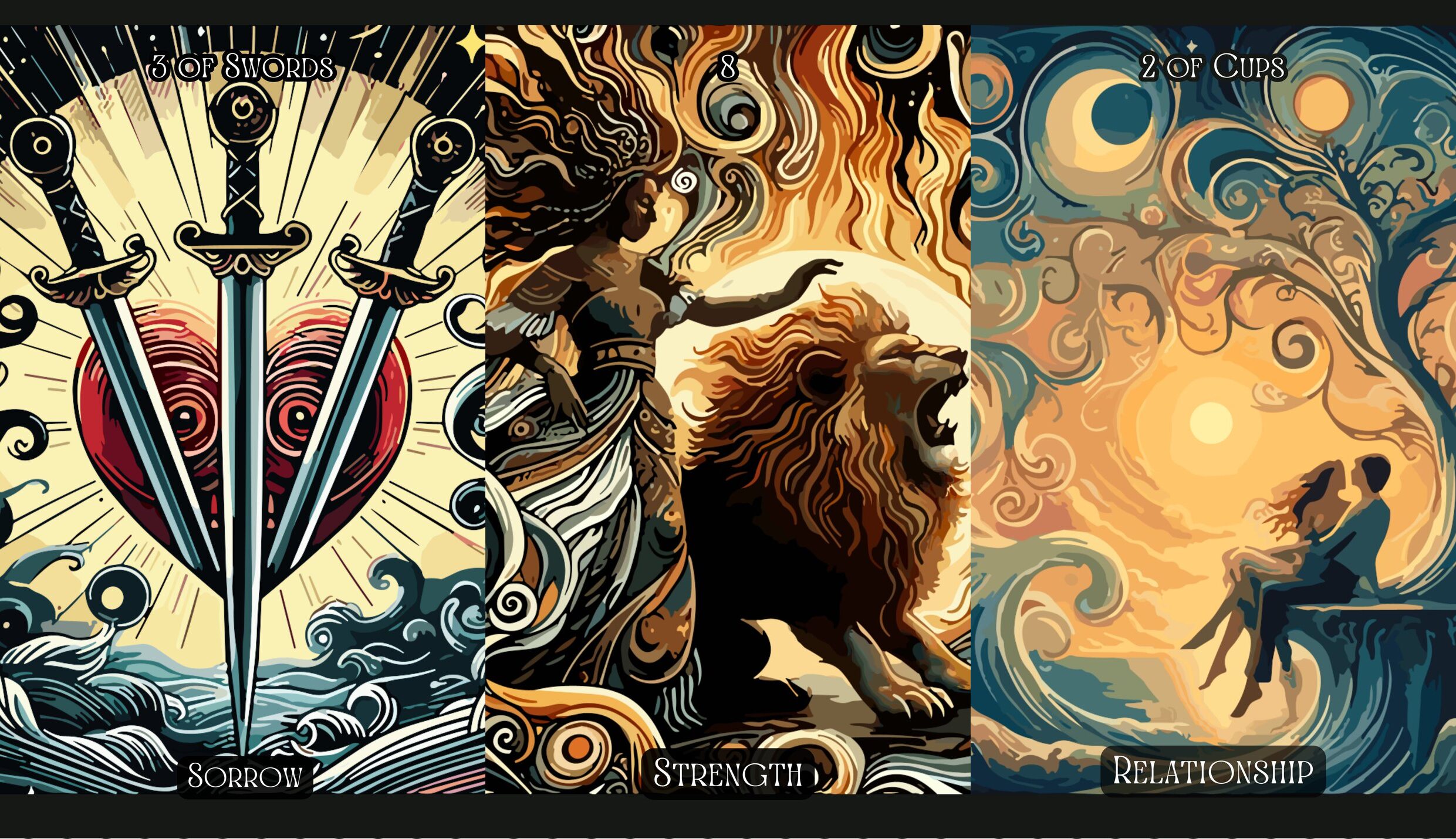
Three of Swords + Strength + Two of Cups
Healing after heartbreak; a healthier bond is possible. Three of Swords is the wound; Strength is the gentle courage to heal; Two of Cups is the better connection waiting.
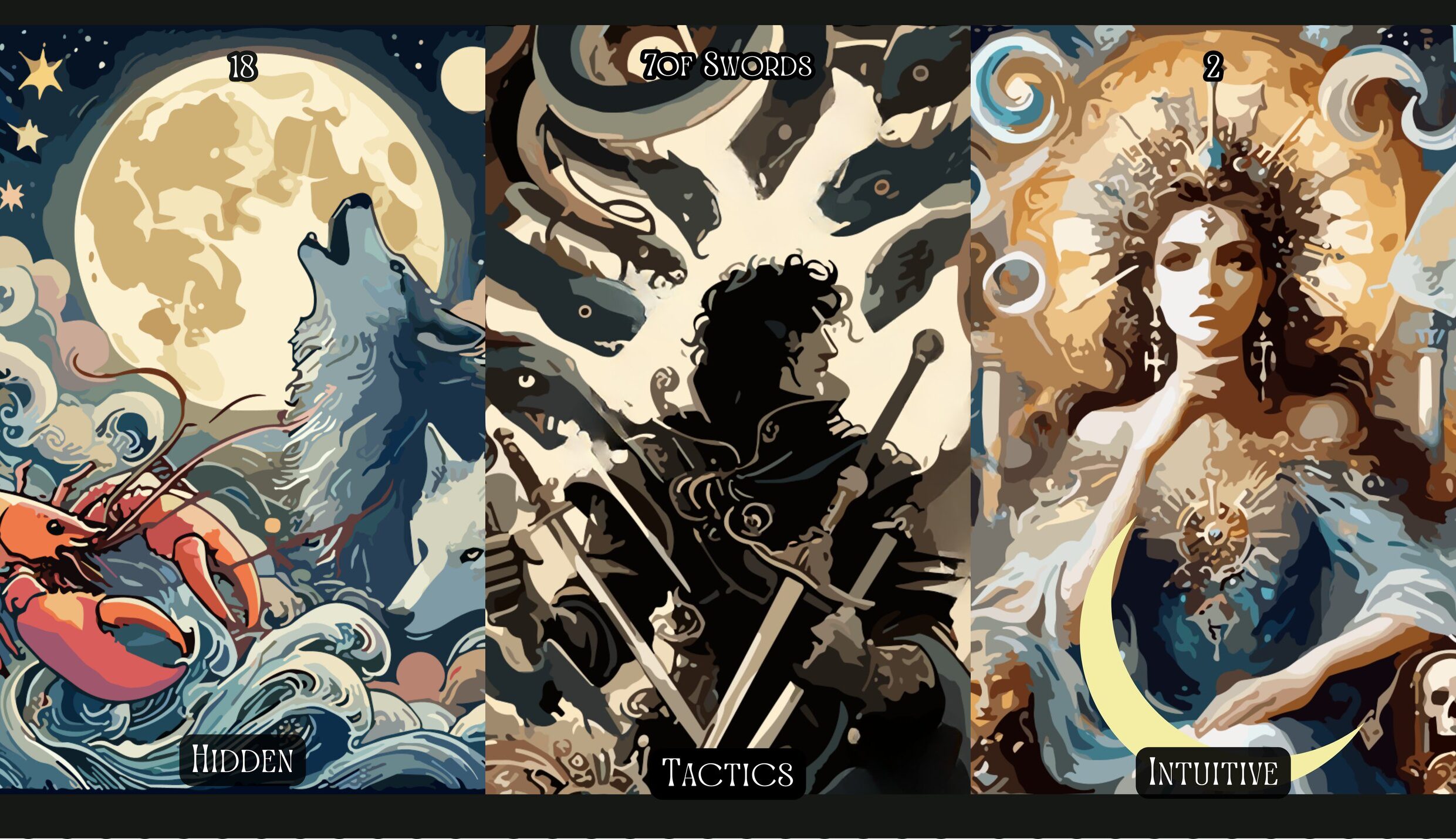
The Moon + Seven of Swords + The High Priestess
Trust your gut - something in the connection is hidden. The Moon is the not-knowing; Seven of Swords says someone is not showing the whole picture; the High Priestess says your intuition already knows.
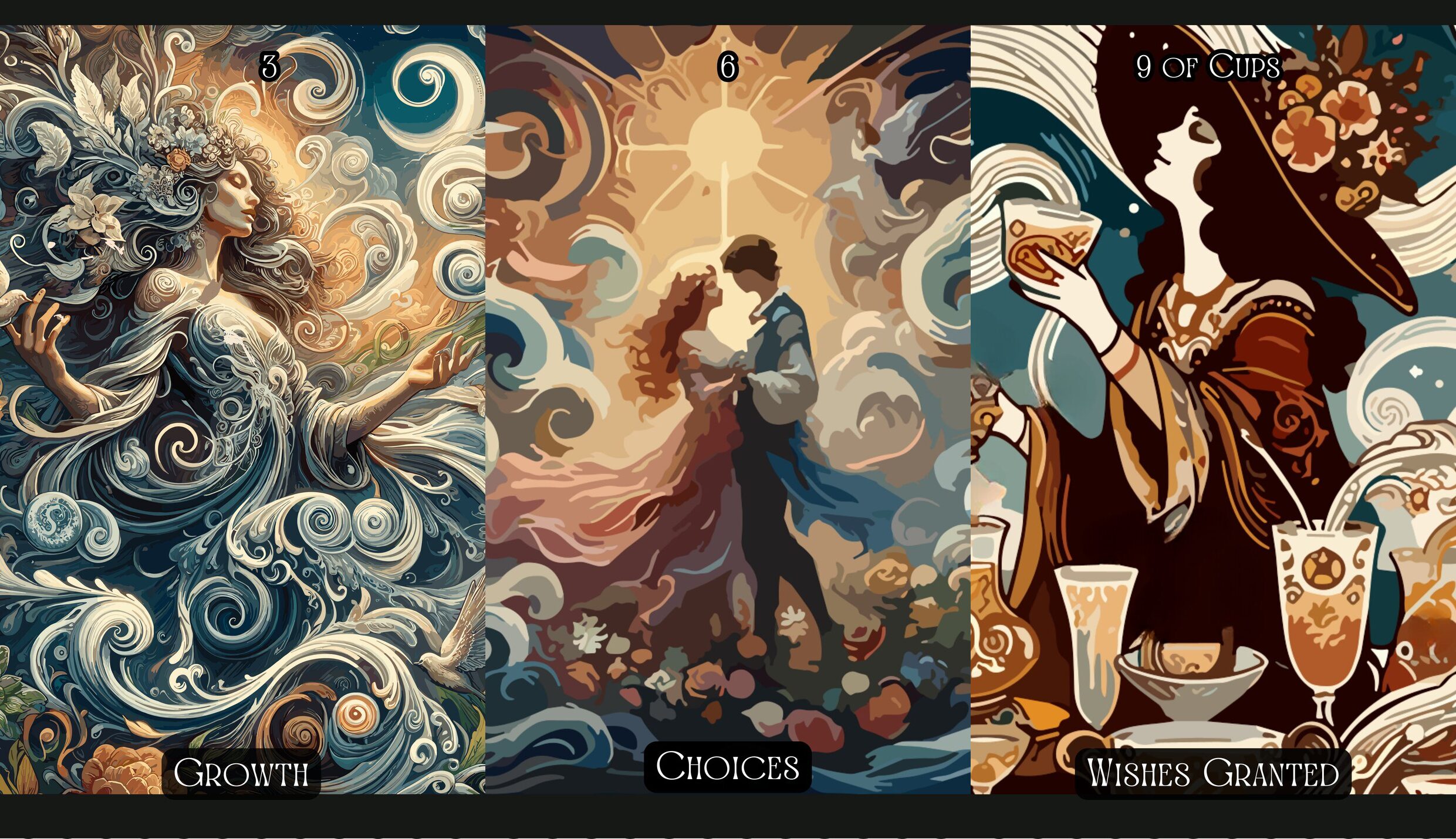
The Empress + The Lovers + Nine of Cups
A wish-fulfilling, sensual love - enjoy it. The Empress is pleasure and abundance; the Lovers is the real choice; Nine of Cups is the wish come true.
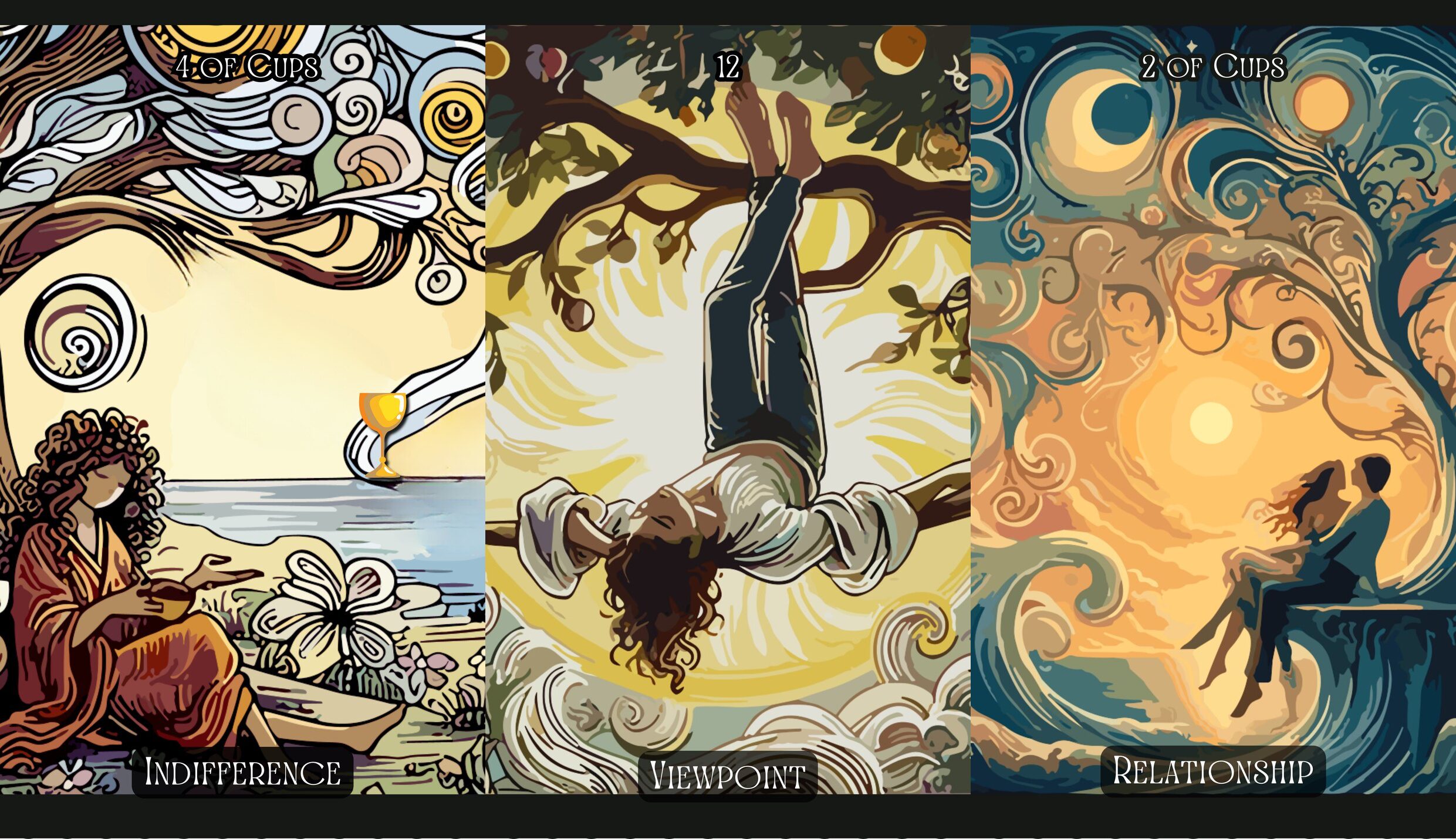
Four of Cups + The Hanged Man + Two of Cups
Boredom in a relationship shifts into a fresh perspective. Four of Cups is the discontent; the Hanged Man flips your view; Two of Cups is the reconnection it leads to.
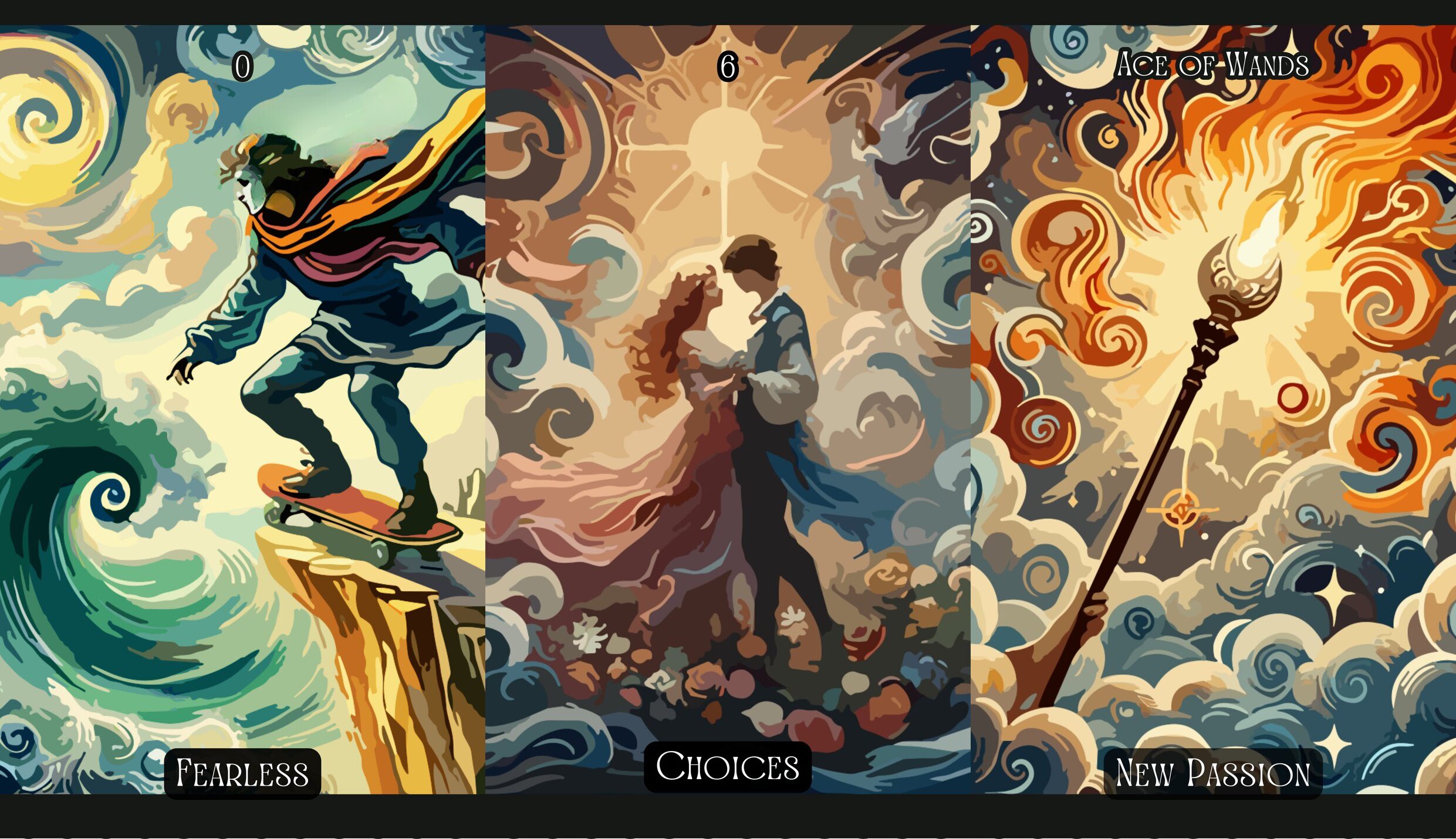
The Fool + The Lovers + Ace of Wands
A bold new romance with a spark of passion. The Fool says leap; the Lovers is the heart-choice; Ace of Wands is the spark that says go.
4 Meaningful Tarot Spreads for Love & Relationships
Love and relationship questions are among the most common reasons people turn to cartomancy. Whether you are navigating a new connection or deepening an existing partnership, these four relationship spreads bring clarity and insight.
1. The Two Mirrors Spread (2 Cards)
A fast 2-card layout to check mutual energy and emotional alignment:
- Card 1 (Left): What you bring to the connection right now.
- Card 2 (Right): What your partner (or person of interest) brings to the connection.
2. Relationship Dynamics Spread (3 Cards)
Helps identify common ground and areas for growth:
- Card 1: The core strength of the relationship.
- Card 2: The hidden challenge or lesson to work through.
- Card 3: The highest potential outcome.
3. The Self-Love Mirror Spread (3 Cards)
Focuses on personal growth before inviting partnership:
- Card 1: An emotional strength you often overlook.
- Card 2: A pattern or boundary to heal.
- Card 3: How to invite healthier love into your life.
Tarot Spreads for Self-Reflection
A spread is just a question with seats for the answers. The card positions tell the cards what job to do. Here are five gentle spreads for looking inward, not for fortune-telling. Start with one card and grow only when it feels easy.
1. One card: the daily mirror
One card. Question: what do I need to see today? This is the practice that builds everything else. Do this for a month before adding more cards. (See How to Start Reading Tarot for the full daily method.)
2. Past / Present / Future (3 cards)
Lay three cards left to right.
- Past: what's still influencing you from behind.
- Present: where you actually are right now.
- Future: where this is tending, if nothing changes.
The future card is a tendency, not a prediction. It shows momentum, not fate.
3. Mind / Body / Spirit (3 cards)
A check-in spread, good for Sundays or the start of a month.
- Mind: what's occupying your head.
- Body: what your body needs you to notice.
- Spirit: what your deeper self is asking for.
4. Release / Keep (2 cards)
Two cards, one question: what do I need to let go of, and what do I need to keep?
- Release: the thing that's weighing you down or no longer fits.
- Keep: the thing worth carrying forward.
This one's small but powerful. Don't be surprised if the release card names something you already knew but hadn't admitted.
5. The shadow spread (4 cards)
For when you're ready to look at the parts you usually avoid. I walk through it carefully in Shadow Work with Tarot: A Beginner's Guide, because that one deserves a slower setup.
How to read a spread (the part most people skip)
- Read each card in its position first. The same card means different things in past versus future.
- Then read the story between them. How does card 1 lead into card 2? Where's the tension? The relationship between cards is usually more honest than any single card alone.
- Notice repeats and suits. Three cups in a row is saying something about emotion. A lot of swords can point at overthinking.
- Write it down. A spread you forget is a spread you can't learn from. Three lines is enough.
Spreads are scaffolding, not rules. Once you're comfortable, change the questions to fit what you actually want to know. The best spread is the one you'll actually use.
↑ back to the listYes / No Tarot: 8 Three-Card Combination Readings
Sometimes you just need a yes or a no. Single cards are shaky for that, but a three-card combo gives a clear answer with a reason attached. Here are 8 yes/no three-card readings pulled with the Swirl Tarot - some clearly yes, some clearly no, some maybe.
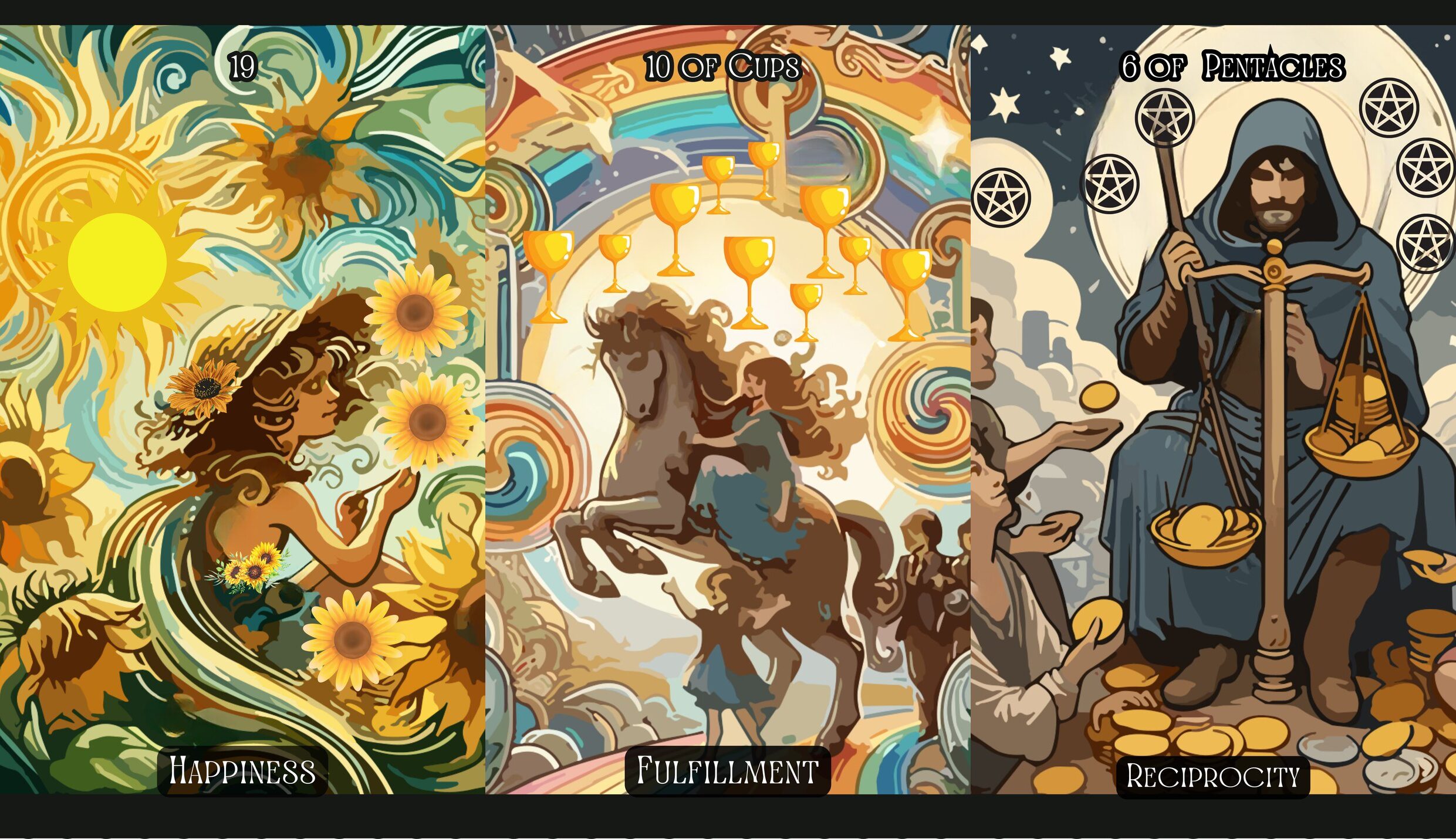
The Sun + Ten of Cups + Six of Pentacles
YES, warmly. The Sun is clear happiness; Ten of Cups is emotional fulfillment; Six of Pentacles is generosity flowing your way. A full, glad yes.
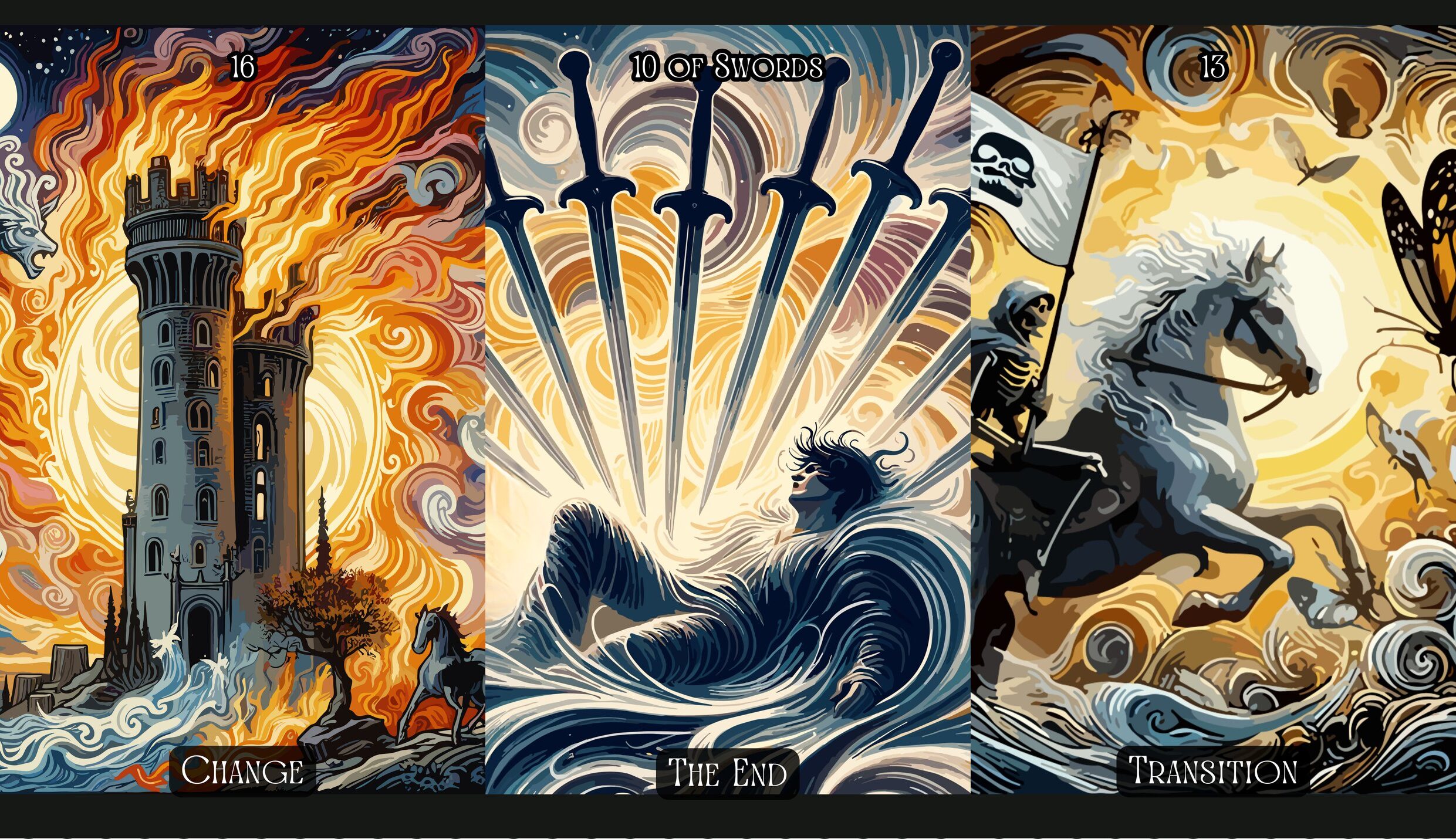
The Tower + Ten of Swords + Death
NO, definitively - let it go. The Tower is the collapse; Ten of Swords is the definitive end; Death is the close that clears the way.
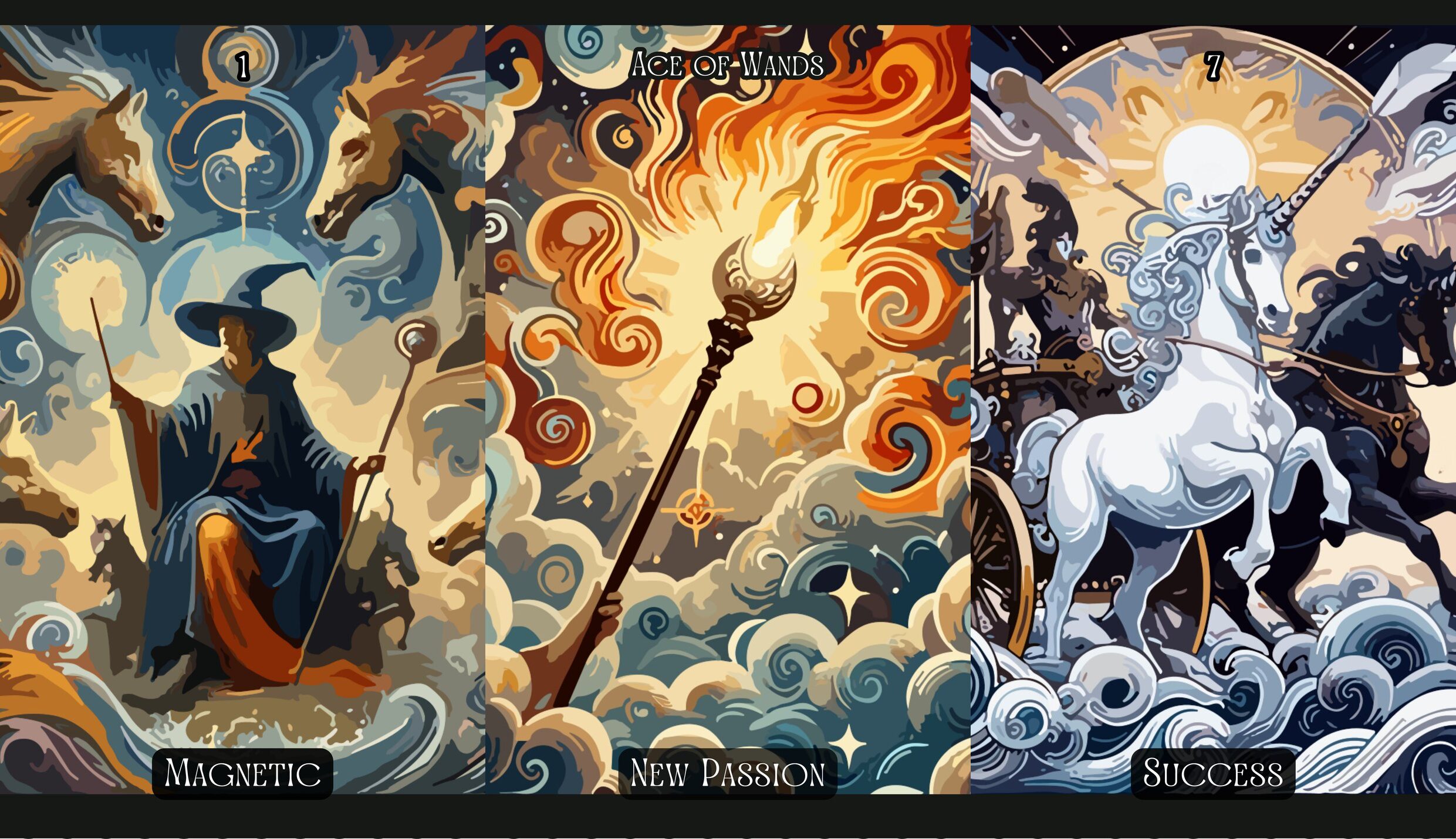
The Magician + Ace of Wands + The Chariot
YES, act now. The Magician says you have the tools; Ace of Wands is the spark; the Chariot is the momentum. Green light - move.
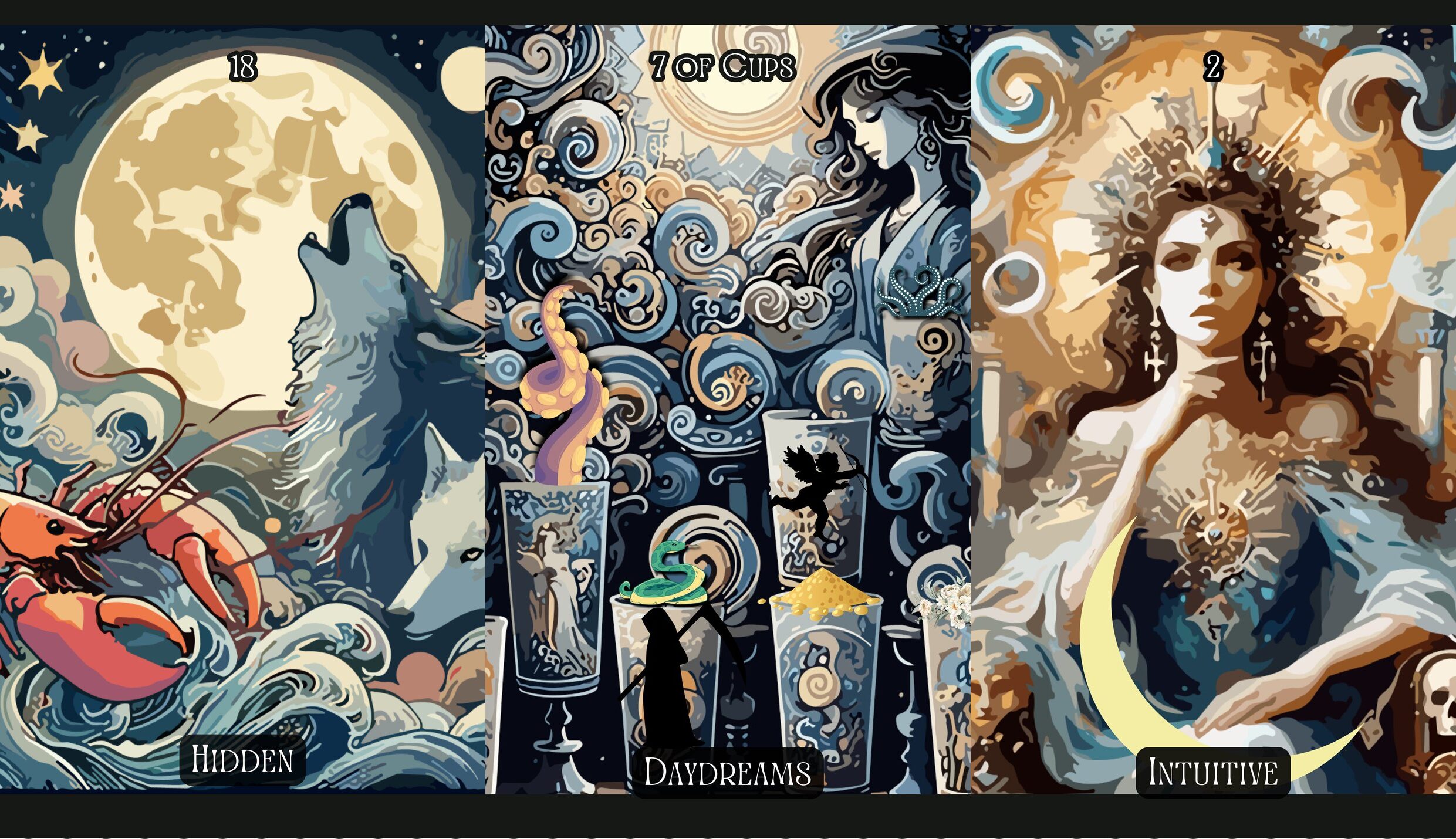
The Moon + Seven of Cups + The High Priestess
MAYBE - unclear, wait for clarity. The Moon is confusion; Seven of Cups is too many options; the High Priestess says the answer is not ready to surface yet.
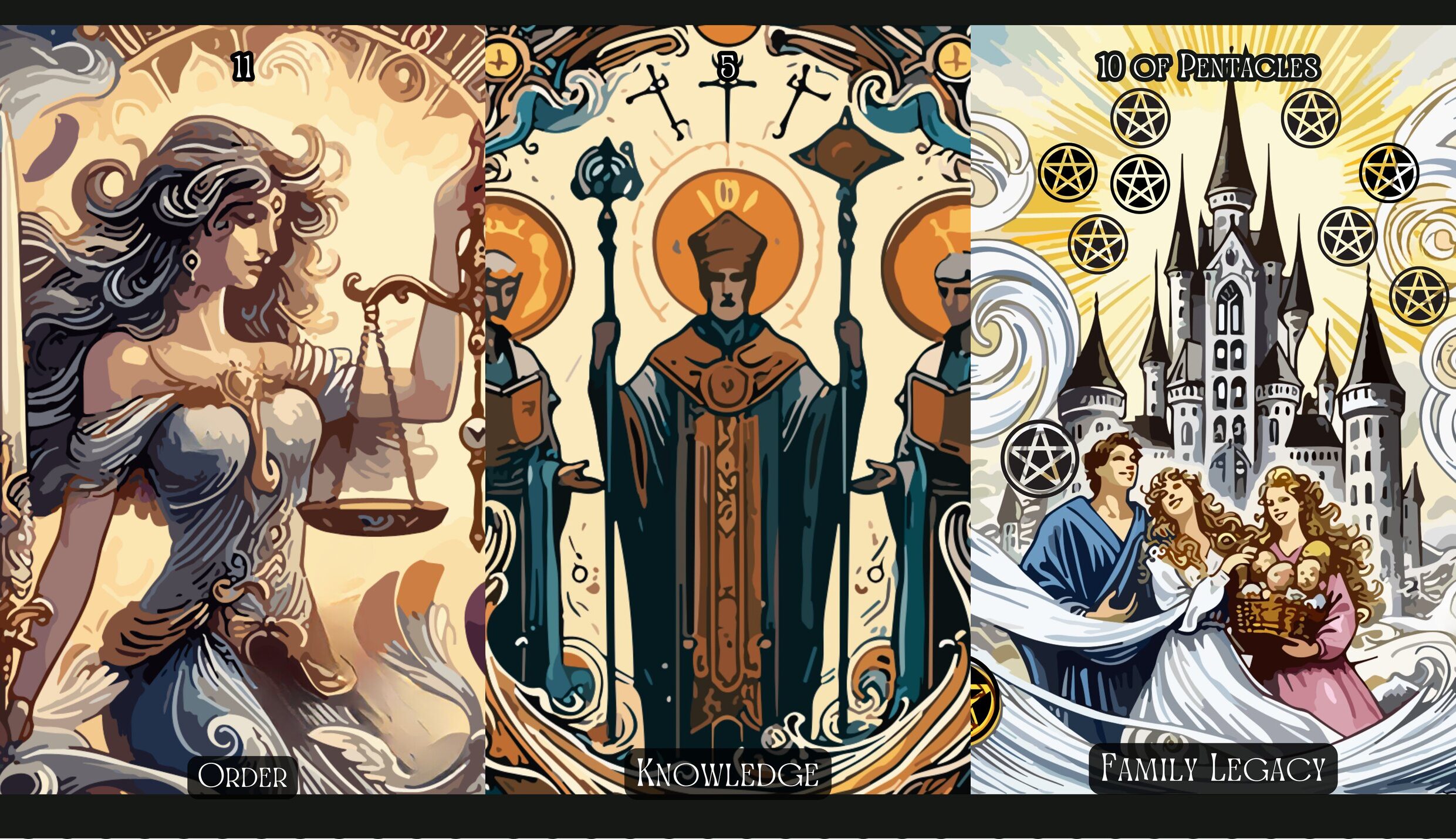
Justice + The Hierophant + Ten of Pentacles
YES, through patience and doing it right. Justice balances it; the Hierophant says follow the proper process; Ten of Pentacles is the lasting result.
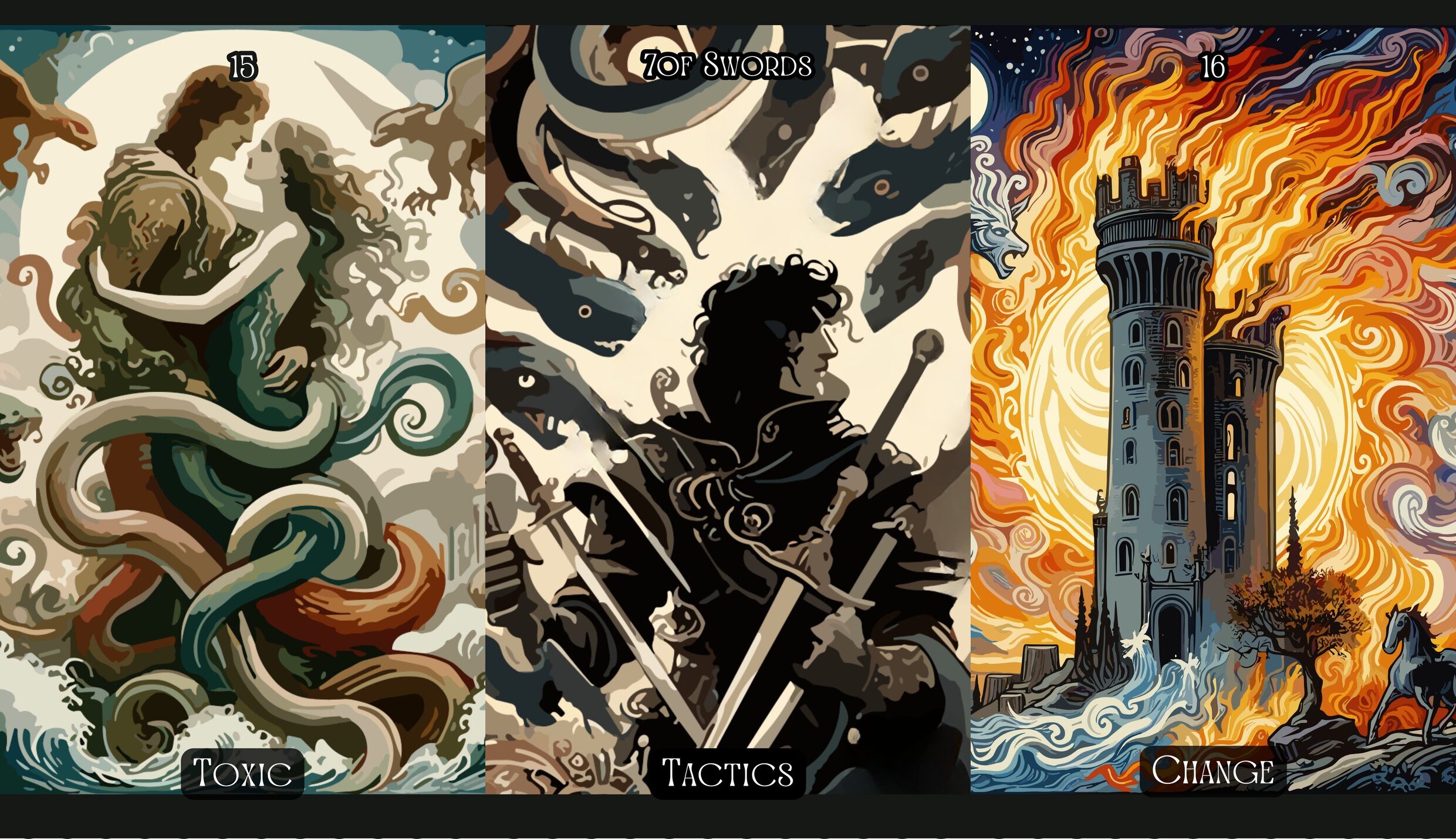
The Devil + Seven of Swords + The Tower
NO - this is a trap, walk away. The Devil is the unhealthy pull; Seven of Swords is the hidden agenda; the Tower is the collapse waiting.
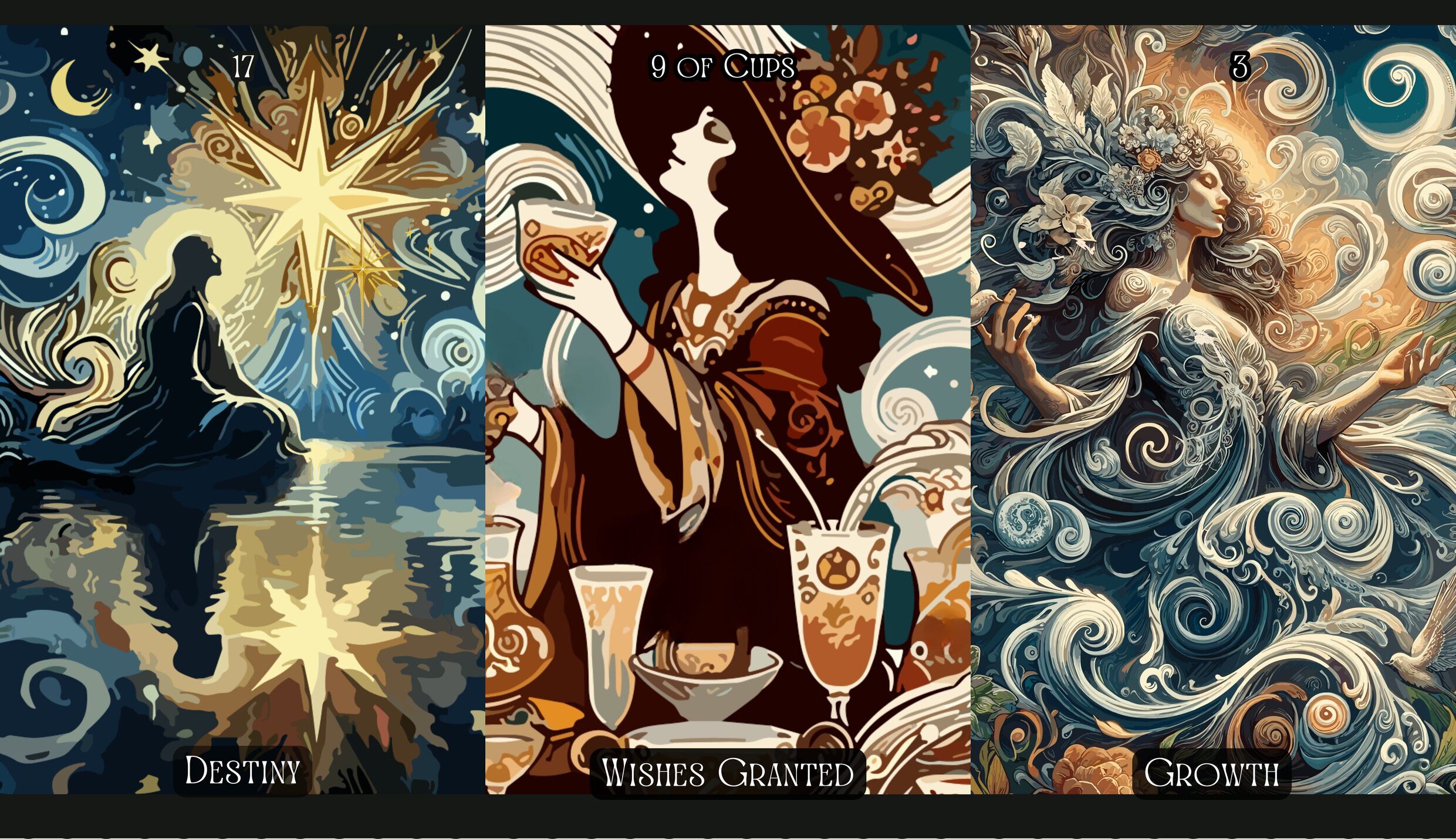
The Star + Nine of Cups + The Empress
YES - a wish coming true. The Star is hope and healing; Nine of Cups is the wish fulfilled; the Empress is the abundance around it.
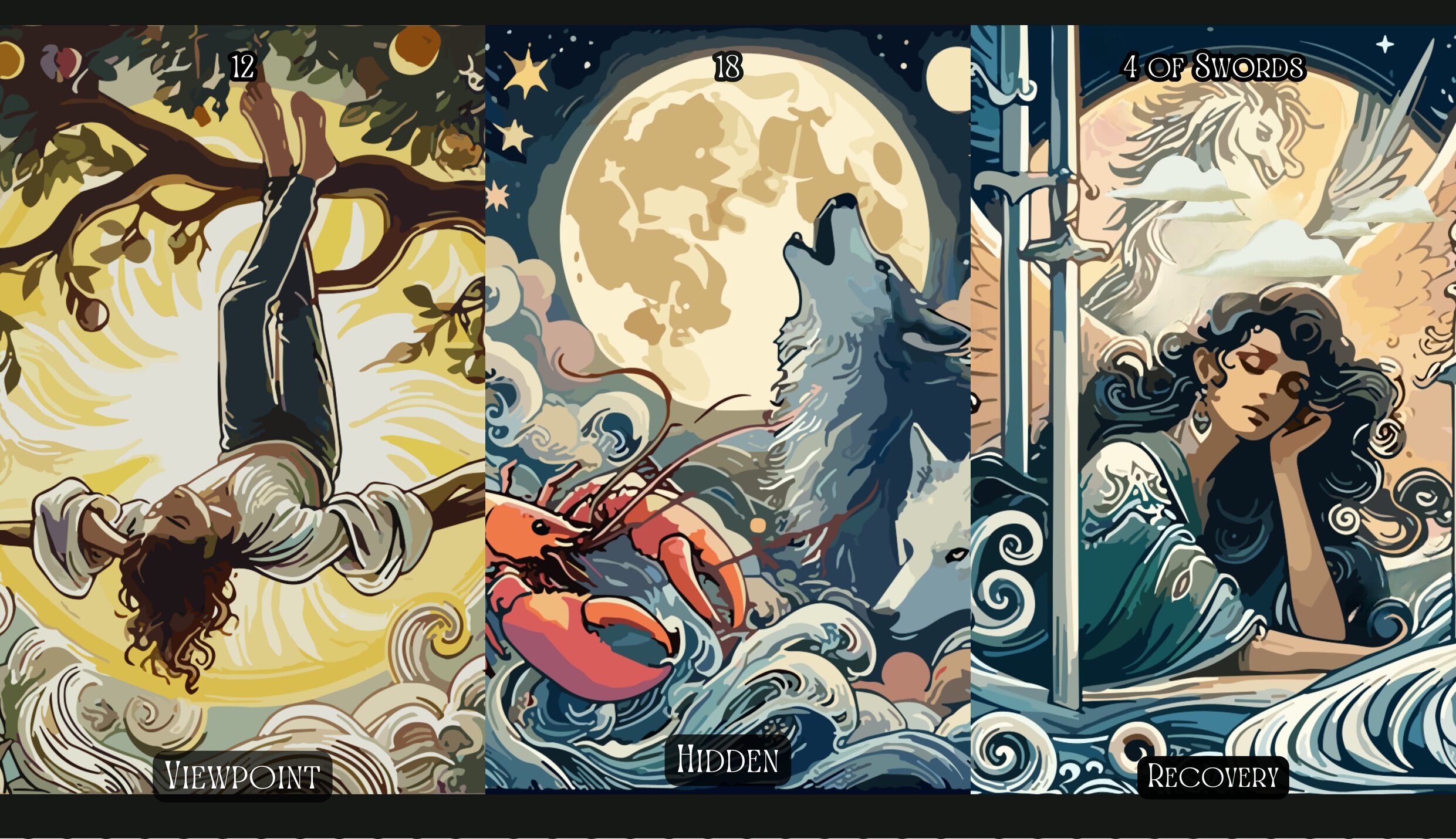
The Hanged Man + The Moon + Four of Swords
MAYBE / not yet - pause and rest. The Hanged Man says wait for a new angle; the Moon says it is still unclear; Four of Swords says rest first.
Yes/No Tarot Spreads for Quick Answers
Sometimes you do not need a ten-card story. You need a yes or a no. Should I take the job? Is this the right time? Tarot is genuinely better at nuance than binary answers, but with the right framing you can absolutely pull a clean yes/no, and it does not require a fancy spread.
First, frame the question right
Most muddy yes/no readings come from muddy questions. "Will I be happy?" is not a yes/no question. "Should I accept the offer I got today?" is. A few rules:
- Be specific. Name the actual thing, not a vague feeling around it.
- One question at a time. If it is secretly two questions, split it.
- Give it a time frame if you can. "This month" reads cleaner than "eventually."
- Do not ask what you already decided. If your mind is made up, the cards will just echo you back.
The one-card yes/no
Shuffle, pull one card. The simplest reading: upright is a yes, reversed is a no. It is blunt and it works more often than it has any right to. The nuance: some readers read reversals, some do not. If you do not use reversals, let the card's energy decide. The Sun, the Star, the Ace of Wands, the World, a happy court card, those are yeses. The Tower, the Moon, the Ten of Swords, a blocked-feeling card, those are no. The middle cards (Temperance, the Hanged Man, the Two of Swords) are "not yet" or "it depends."
The three-card yes/no
Pull three. Read each as a yes (upright/positive), a no (reversed/heavy), or a maybe (neutral). Majority wins. Two yeses and a no is a yes with a catch. Three maybes means the timing or the question is off; rephrase and try again. You can also read them as a tiny past/present/future: the first card shows where the question is coming from, the middle is the real situation now, the last is where it is heading.
Read the energy, not just the flip
A card that lands upright but feels hesitant is not a clean yes. A "no" card that lands upright and bright might be a yes to something you did not expect. The cards are conversation, not a coin flip. Notice the suit too. Wands and Swords are fast and decisive, great for yes/no. Cups and Pentacles move slower, so a yes from them might mean "yes, but it takes a while."
When a yes/no spread will not answer
If you pull three muddy cards in a row, the deck is not being stubborn, it is telling you the question is not ready. Usually one of these is true: the question is too vague, you already know the answer and want the cards to decide for you, or the outcome genuinely depends on a choice you have not made yet. In that case, put the deck down, get clear, and ask again tomorrow.
A quick ritual
Breathe in, breathe out, say the question out loud or in your head, and pull. Do not redraw a card you do not like. The first pull is the answer. If you want practice, try a self-reflection spread next, then come back to yes/no once you are comfy.
↑ back to the list